LED grow lights are now the most effective and energy-efficient choice for indoor growing. This guide explains the science, compares LED against HPS, and shows how to get the best results in your grow space.
This guide answers the question: do LED grow lights really work? Read on for the full picture. In the rapidly evolving world of indoor horticulture, the debate over lighting often centers on whether LED (Light Emitting Diode) technology can truly compete with traditional High-Intensity Discharge (HID) systems. For years, HPS (High-Pressure Sodium) lamps were the undisputed industry standard. However, recent breakthroughs in diode efficiency and spectrum control have transformed LEDs from an experimental alternative into the most effective tool for modern growers.
This guide explores the science behind why LED grow lights work, how they compare to older technology, and how you can maximize their potential in your own grow space.
The Science of “Phosphate Photon Flux” (PPF)
To understand if LED lights “work,” we must look beyond watts and lumens—units designed for human eyes—and focus on PAR (Photosynthetically Active Radiation). This is the specific range of light (400 to 700 nanometers) that plants use for photosynthesis.
- Customizable Spectrums: Unlike HID bulbs, which emit a fixed color, LEDs can be engineered to hit “peak” absorption points. For instance, blue light (400–500nm) promotes thick stems and lush foliage during the vegetative stage, while deep red light (660nm) triggers heavy flowering and resin production.
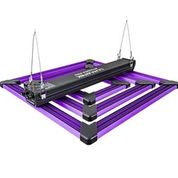
- Efficacy and PPFD: Modern LEDs, such as the Lumatek ATS Pro series, deliver a higher Photosynthetic Photon Efficacy (PPE). This means they convert more electricity into usable plant light and less into wasted heat compared to any other light source on the market.
LED vs. HID – A Practical Comparison
While the upfront cost of an LED fixture is often higher than an HPS kit, the long-term Return on Investment (ROI) is significant.
| Feature | LED Grow Lights | HID (HPS/MH) Lights |
| Heat Output | Very Low; allows for closer canopy placement. | High; requires intensive ventilation/cooling. |
| Lifespan | 50,000+ hours (approx. 10+ years). | 10,000–15,000 hours (bulbs degrade quickly). |
| Energy Use | Up to 40-50% more efficient. | High power consumption per gram of yield. |
| Light Spread | Uniform “Bar” or “Board” distribution. | Centralized “Hot spot” directly under the bulb. |
The “Heat Factor”: One of the primary reasons LEDs “work” better in small spaces is their thermal management. Excess heat from HPS lamps often stresses plants, leading to “foxtailing” or terpene loss. Because LEDs run cooler, you can maintain a more stable environment, which is crucial for high-quality harvests.
Step-by-Step Guide to Success with LEDs
Transitioning to LED lighting requires a slight shift in your growing technique. Follow these steps to ensure your plants thrive under the new spectrum.
Step 1: Calibrate Your Hanging Height
Because LEDs are highly directional, hanging them too close can cause “light bleach” even without high heat.
- Seedlings: 24–36 inches away at 20–40% power.
- Vegetative: 18–24 inches away at 50–70% power.
- Flowering: 12–18 inches away at 100% power.
Step 2: Monitor Your Room Temperature
In an HPS room, the “radiant heat” from the bulb warms the leaf surface. When you switch to LED, your leaf surface temperature may drop. You might need to increase your ambient room temperature by 2–3°C to ensure the plant’s metabolic processes (transpiration) remain at peak levels.
Step 3: Adjust Your Nutrient Feed
Plants under high-performance LEDs often “work harder” because of the optimized spectrum. Many growers find that their plants require more Cal-Mag (Calcium and Magnesium) when using LEDs, as these minerals are used more rapidly during intense photosynthesis.
External Resources and Research
The effectiveness of LEDs isn’t just anecdotal; it is backed by institutional research.
- NASA Research: LED technology was pioneered by NASA for growing food in space due to its efficiency and reliability. You can read their findings on plant growth in controlled environments here.
- University Studies: Research from the University of Utah’s Crop Physiology Lab has demonstrated that far-red LEDs can increase biomass and “stretch” plants predictably, allowing for better canopy management.
Video Guide: LED vs HPS Side-by-Side
For a visual breakdown of how yields and quality differ between these two technologies, check out this comparison by Migro, one of the leading experts in horticultural lighting testing.
Final Verdict: Do They Work?
Yes. In fact, for the modern home grower or commercial facility, LEDs are no longer just an option, they are the standard. By reducing energy costs, minimizing heat stress, and providing a “sun-like” full spectrum, LED grow lights allow you to produce professional-grade crops in almost any indoor environment.
Ready to upgrade? Explore our curated range of professional LED grow lights to find the perfect fit for your grow tent.
Related Articles
- Grow Lights Guide – Light Spectrums & Plant Stages — the complete reference
- The Benefits of LED Grow Lights
- UV Light for Plants: The Complete Guide — how UV supplementation improves terpene production and harvest quality
Growing with LED Bulbs: What Actually Works
Many growers ask whether they can grow plants using standard LED bulbs from a hardware store rather than a dedicated grow light. The honest answer: yes, with significant caveats. Understanding why helps you make better decisions about your setup — and avoid wasting money on the wrong equipment.
What Makes an LED Bulb Suitable for Growing?
Plants need light in the 400–700nm wavelength range — the photosynthetically active radiation (PAR) spectrum. Specifically, they use blue light (400–500nm) for vegetative growth and red light (600–700nm) for flowering. Standard white LED bulbs emit a broad spectrum that includes these wavelengths, but the intensity is typically far lower than a dedicated grow light.
For growing with LED bulbs to be effective, you need:
- High output per bulb — look for bulbs rated at 1,500–2,000 lumens or higher. Dim ambient bulbs produce insufficient PAR at plant canopy level.
- The right colour temperature — 6,500K (daylight/cool white) bulbs are best for vegetative growth; 2,700K (warm white) bulbs support flowering. Use daylight bulbs for the full cycle if you only want one type.
- Sufficient coverage — a single LED bulb is only useful for a single small plant or seedling tray. For a 60×60cm space, you need multiple bulbs — typically 8–12 × 10W bulbs at close range.
- Close placement — LED bulbs lose intensity rapidly with distance. Place bulbs 10–30cm from the canopy for useful PPFD levels.
LED Bulbs vs Dedicated LED Grow Lights: The Real Difference
| Standard LED Bulbs | Dedicated LED Grow Lights | |
|---|---|---|
| PAR output | Low–moderate | High (optimised spectrum) |
| Red:Blue ratio | Unoptimised (white light) | Dialled in for plant response |
| Coverage | Small (1 plant per bulb) | Full tent coverage |
| Heat | Low | Low–moderate (varies by model) |
| Cost to cover 1.2×1.2m | £30–60 for bulbs + fittings | £150–500 for quality fixture |
| Yield per watt | Low | High |
| Best for | Seedlings, propagation, herbs | Veg and flower in grow tents |
When LED Bulbs Are a Practical Choice
Growing with LED bulbs makes sense for: propagation trays and seedling stages where low intensity is sufficient; growing herbs and leafy greens on a kitchen windowsill or shelf; very small spaces (single plants, micro-grows) where a full grow light would be overkill; and supplemental lighting alongside natural light in a greenhouse or conservatory.
For flowering crops, fruiting vegetables, or any plant that needs high light intensity to perform well, a dedicated LED grow light — even a budget one — will significantly outperform a bank of household LED bulbs. The PPFD at canopy level is simply not comparable.
Frequently Asked Questions
Yes — modern LED grow lights produce yields comparable to HPS at equivalent light intensities (PPFD), with 40–50% lower electricity consumption and significantly less heat output. Early LED technology underdelivered, but today’s quantum board and bar-style LEDs from established brands consistently match or exceed HPS performance in both commercial and hobbyist grows.
A quality LED typically uses 40–50% less electricity than an HPS system delivering the same PPFD to the canopy. A 600W HPS is often matched in light intensity by a 300–350W LED. Over a full growing year, the energy savings typically outweigh the higher upfront cost of a quality LED, making it the more economical choice long-term.
No — standard household LED bulbs do not provide the right spectrum or intensity for plant growth. Horticultural LEDs deliver full-spectrum light including the red and blue wavelengths plants require for photosynthesis, at intensities (measured in PPFD) sufficient to drive productive growth through every stage from propagation to harvest.
Quality LED grow lights are rated for 50,000–100,000 hours of use, far exceeding the 10,000–24,000 hours typical of HPS bulbs. In practice, light output gradually diminishes over time, so many growers choose to replace LEDs every 3–5 years to maintain peak PPFD output, though the lights themselves remain functional much longer.
Shop the Products in This Guide
Browse by category: Adjust a Wing reflectors, CFL Lights, Daylight Grow Lights, Digital Ballasts, Gavita Grow Lights, Grow Light Reflectors.
Shop featured products: ADJUST-A- WINGS ENFORCER SMALL REFLECTOR AND LAMPHOLDER, ADJUST-A-WINGS 315W E40 3K LAMP, ADJUST-A-WINGS SPREADER LARGE, ADJUST-A-WINGS SPREADER MEDIUM.
Ready to choose a light? See our expert comparison of the best LED grow lights in the UK for 2026 — ranked by PPFD, efficiency and value.