

This plant propagation guide covers every technique indoor growers need — from cuttings and seeds to rooting methods, timings, and troubleshooting.
Propagation is where every grow begins — and getting it right sets the trajectory for everything that follows. Whether you’re germinating seeds or taking cuttings, the goal is the same: establish a healthy, well-rooted young plant as quickly and reliably as possible, ready to thrive once it moves into your main growing environment. This guide covers both methods in detail, with practical advice on the equipment and conditions that make the difference between consistent results and frustrating failures.
Propagation from Seed
This plant propagation guide indoor growing is your complete resource for indoor growing success. Growing from seed gives you access to the widest possible range of plant genetics, and for many crops — tomatoes, peppers, herbs, and most vegetables — it’s the only practical starting point. Seeds also carry no disease or pest risk from a previous growing cycle, making them a clean, reliable starting point.
Germinating Seeds
Seeds need three things to germinate: moisture, warmth, and darkness. The most reliable germination method is the paper towel technique:
- Dampen two sheets of kitchen paper — moist but not dripping
- Place seeds between the sheets on a plate
- Cover with another plate or cling film to retain moisture
- Keep at 22–26°C — a propagator with a heat mat is ideal
- Check daily. Most seeds crack and show a root tip within 24–72 hours
- Transfer to your propagation medium (rockwool cube, peat pellet, or propagation tray) as soon as the tap root is 3–5mm long
Alternatively, germinate seeds directly in small pots of pre-moistened propagation medium or seed compost at 5–10mm depth. This avoids the handling risk of transferring germinated seeds, though the paper towel method gives you clearer visibility of germination progress.
Seedling Stage
Once germinated, seedlings need:
- Light: Low-intensity propagation lighting or LEDs at 100–200 µmol/m²/s. Full-power grow lights at this stage cause stress and bleaching.
- Temperature: 22–26°C at canopy level — a propagator dome maintains this easily
- Humidity: 70–80% relative humidity inside the propagator dome to prevent the seedling from wilting before its root system is established
- Water: Keep the medium moist but not saturated — roots need oxygen as well as water. Water around the base of the stem, not on the seedling itself
- Nutrients: Start very low — 0.4–0.6 EC at most for the first week or two. Seedlings are highly sensitive to nutrient excess
Propagation from Cuttings (Cloning)
Taking cuttings from established plants is the most efficient way to propagate genetically identical copies of a mother plant. Every cutting is a clone — it carries the exact genetics of the parent, including all of the growth characteristics, flowering behaviour, and quality traits you’ve already observed and selected for. This makes cloning the preferred propagation method for growers who want consistency and repeatability.
Taking a Cutting
- Select a healthy shoot from the lower or mid section of the mother plant — shoots that receive less direct light root faster than highly productive top growth
- Take cuttings 10–15cm long with at least 2–3 nodes (leaf sets) on the stem
- Cut at a 45-degree angle using a sharp, clean blade or scalpel — the angle increases the surface area available for root development
- Immediately place the cut end into a glass of clean water to prevent air embolism in the stem
- Remove any leaves from the bottom two nodes, and trim large leaves by half to reduce transpiration demand while the cutting has no roots
- Dip the cut end in rooting gel or powder, then insert into your rooting medium
Rooting Media for Cuttings
- Rockwool cubes: The most widely used rooting medium for cuttings. Pre-soak in pH 5.5 water, squeeze out excess, and insert cuttings. Excellent moisture retention and root visibility through the block.
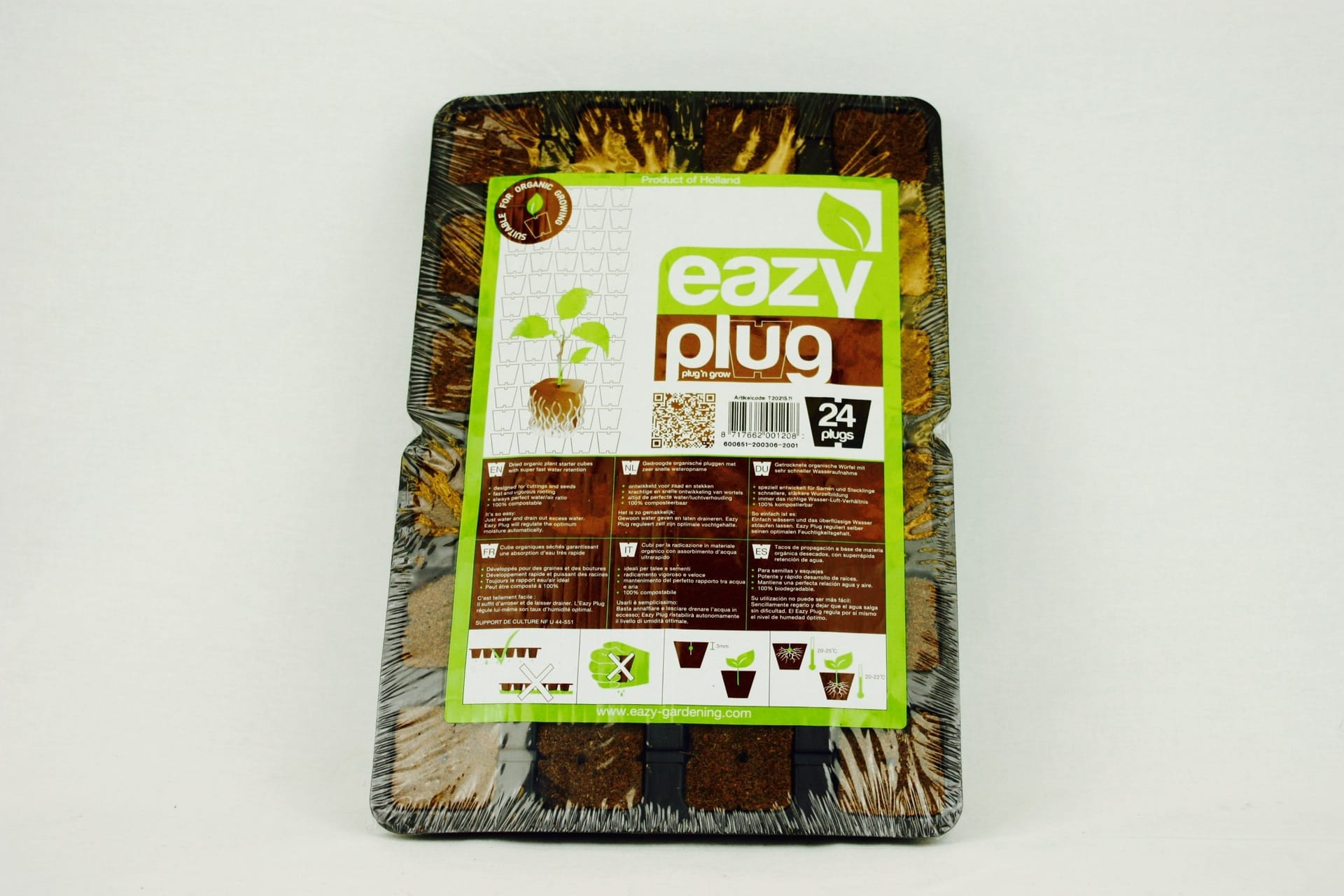
- Rapid Rooters / Root Riots: Organic sponge-based plugs that provide a great moisture-to-oxygen balance. Popular for both seeds and cuttings and work well as a gateway into any media type.
- Perlite: Some growers root directly in moistened perlite — it’s inexpensive and provides excellent aeration. Requires careful moisture monitoring as it dries faster than cubes or plugs.
- Aeroponics / cloning machines: Mist the cut ends of cuttings directly with water and nutrient solution. Extremely fast rooting times (5–8 days vs 10–14 in solid media) but requires a dedicated cloning machine.
Rooting Conditions
Successful rooting requires the right combination of humidity, temperature, and light. A propagator dome is ideal for maintaining these conditions:
- Humidity: 80–90% under the dome — prevents wilting before roots develop. Gradually reduce humidity over the last few days before transplanting to acclimatise the cutting
- Temperature: 22–26°C air temperature; root zone temperature of 22–24°C. A heat mat under the propagator significantly improves rooting speed and consistency
- Light: Low-intensity propagation lighting — 100–200 µmol/m²/s — on an 18-hour schedule. Avoid direct high-intensity light until the cutting has rooted
- Nutrients: Minimal — plain water or very low EC (0.4–0.6) solution with a rooting stimulant like a B1 vitamin supplement or root booster. Don’t feed heavily until visible roots emerge from the medium
Essential Propagation Equipment
- Propagator: A tray with a transparent humidity dome, ideally with adjustable vents for gradual humidity reduction and a heat mat for root zone temperature control
- Propagation lighting: T5 fluorescent panels or dedicated propagation LED strips provide the right intensity and spectrum for seedlings and cuttings without heat stress
- Rooting gel or powder: Auxin-based rooting hormones dramatically improve rooting success and speed from cuttings. Gel is generally more effective than powder as it coats the cut surface more completely
- Rooting medium: Rockwool cubes, Root Riot plugs, or Rapid Rooters depending on your preference and downstream growing system
- pH meter: Essential for pre-soaking rockwool (pH 5.5) and checking feed water pH for seedlings (pH 6.0–6.2)
- Spray bottle: For misting the inside of the dome and the tops of cuttings to maintain humidity without overwatering the medium
Transplanting — Moving Plants into the Main Growing Area
Transplanting is a stressful event for plants, even when done carefully. To minimise transplant shock:
- Wait until roots are clearly visible emerging from the bottom or sides of the propagation cube or plug before transplanting — premature transplanting is a common mistake
- Pre-moisten the destination medium thoroughly before transplanting
- Make a hole large enough to accept the cube or plug without compressing the emerging roots
- Water in with a dilute solution including a B1 vitamin supplement or root stimulant to support rapid establishment in the new medium
- Keep the new environment at slightly higher humidity for the first 2–3 days while roots adjust to the new medium
Frequently Asked Questions
Cuttings typically root within 7–14 days in optimal conditions: 24°C root zone temperature, 85% humidity, and rooting gel applied to the cut surface. Fast varieties can root in 5–7 days; slower ones may take up to 21 days. If cuttings are still healthy but unrooted after 21 days, check root zone temperature and humidity consistency before adjusting your method.
Wilting in fresh cuttings is almost always caused by insufficient humidity — either the propagator dome is not sealing properly or the vents are open. Cuttings have no root system to draw up water and rely entirely on high ambient humidity to prevent moisture loss through the leaves. Check that all dome vents are closed and the dome is sealed correctly against the tray.
Yes — seeds germinate well in small pots of seed-grade compost or coco, avoiding the transplanting step entirely. Cuttings can also be rooted directly in coco or lightly moistened perlite, though maintaining consistent moisture levels is more challenging than with purpose-made propagation plugs or rockwool cubes.
Rooting gel is the better choice for most growers — it coats the cut surface evenly, stays in contact with the wound during insertion, and consistently outperforms powder in rooting speed and success rate. Both contain synthetic auxins (typically IBA) that stimulate root formation, but gel adheres more reliably than powder, which can clump and fall away.
We stock a full range of propagation equipment including heated propagators, heat mats, propagation lighting, rooting gels, rockwool, Root Riot cubes, and more. Browse our full propagation range online, or contact our team for help choosing the right setup for your propagation method.
For official horticultural guidance and growing tips, the Royal Horticultural Society (RHS) is an excellent resource for gardeners and indoor growers.
Further Reading
- Why Fabric Pots Are Better for Your Plants
- Do Plants Grow Better in Fabric Pots?
- Budget Organic Starter Kit
Shop the Products in This Guide
Browse by category: Propagation, Propagation Lighting, Propagation Media, Propagation Nutrients and Cloning, Propagation Systems.
Shop featured products: ROOT !T 26W LINKABLE SEEDLING LED, T5 4 TUBE 2FT, SUNBLASTER LED PROPAGATION LIGHT, T5 24W BLUE SYLVANIA.