
This grow tents and grow rooms guide covers everything from choosing the right tent to optimising your setup for maximum yield. A grow tent is the single piece of equipment that makes every other aspect of indoor growing easier to manage. It gives you complete control over light, temperature, humidity, and airflow in a contained, reflective environment — without the cost and complexity of converting a dedicated room. Whether you’re growing tomatoes on a budget or building a high-performance indoor garden, the right tent and setup strategy makes an enormous difference to what you can achieve. This guide covers everything you need to know.
Why Use a Grow Tent?
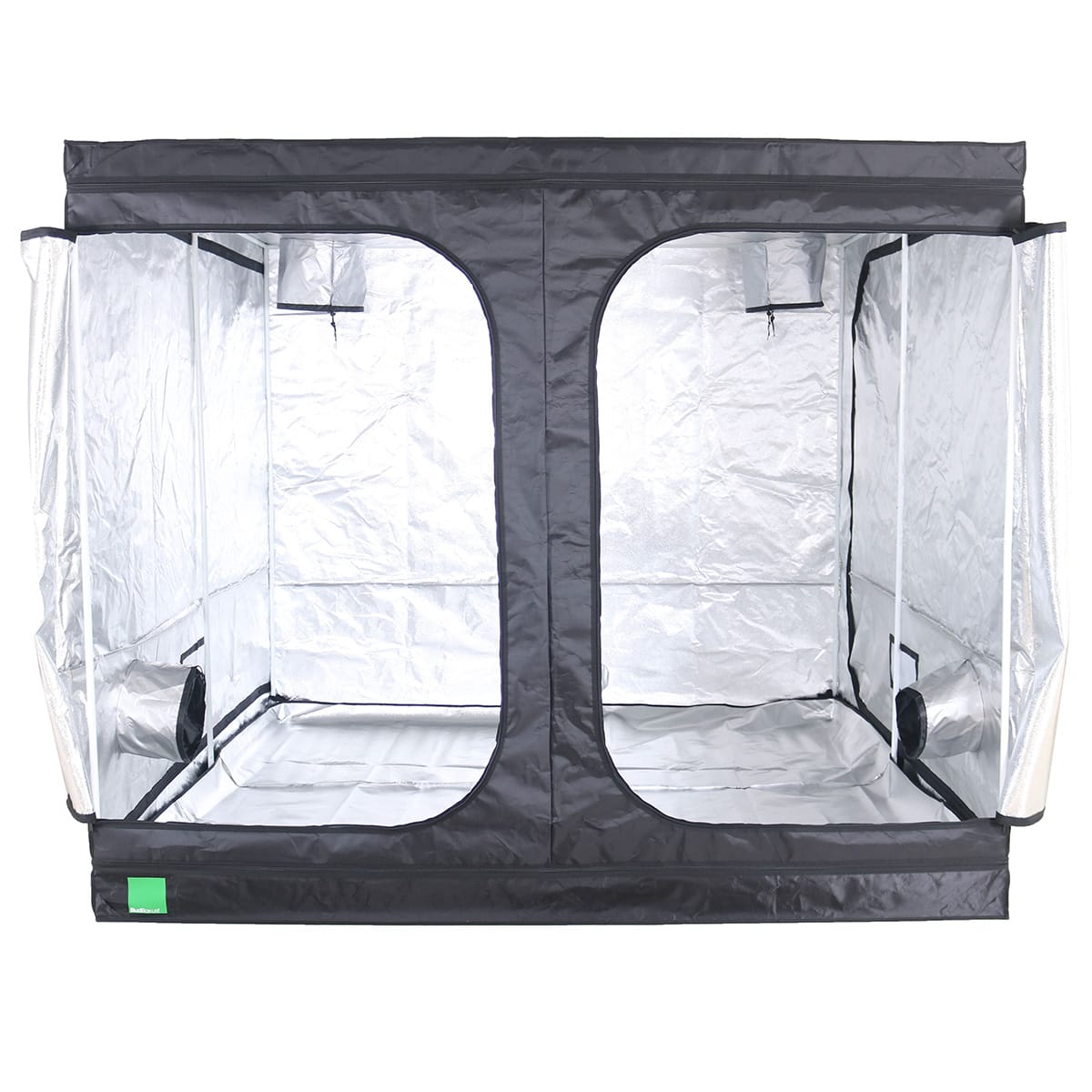
This grow tents and grow rooms guide is your complete resource for indoor growing success. The reflective interior of a grow tent — typically a highly reflective Mylar lining — means that light from your grow light reaches plants from multiple angles rather than simply from above. This can improve light efficiency by 30–40% compared to an unlined room, which means more photosynthetically usable light reaching your canopy without any increase in electricity cost.
Beyond light efficiency, a tent creates a sealed environment that’s easy to control. You can manage temperature and humidity independently of the ambient conditions in your house or outbuilding. You can run carbon filtration to manage odours. You can prevent pest and pathogen ingress from outside the growing area. All of this is dramatically harder to achieve in an open room.
Choosing the Right Grow Tent Size
Tent size is the first decision — and it’s worth thinking carefully about, because it determines every other piece of equipment you’ll need. Consider:
- How many plants do you want to grow? A 1m × 1m tent comfortably fits 1–4 plants depending on training method and plant size. A 1.2m × 1.2m gives more flexibility for larger canopies or additional plants.
- What space do you have available? Factor in access from all sides for maintenance, and ceiling height — most tents require at least 50cm above the tent height for ducting and hanging equipment.
- What lighting are you planning to use? The tent size should match the coverage footprint of your chosen grow light. An undersized light in a large tent creates dark spots at the edges; an oversized light in a small tent creates heat and light stress issues.
Common Tent Sizes and What They’re Best For
- 0.6m × 0.6m: Single-plant grows, mother plant housing, or a dedicated clone/seedling space. Very manageable but limits plant count significantly.
- 0.8m × 0.8m: A good step up from the 0.6 — fits 2–4 small plants or 1–2 trained plants with good canopy coverage.
- 1.0m × 1.0m: A popular size for intermediate growers — enough space for 2–4 medium plants with room to train and manage effectively.
- 1.2m × 1.2m: The most popular all-round size. Fits 4–6 plants comfortably, compatible with 600W HPS and mid-range LED systems, and large enough to use most training techniques effectively.
- 1.5m × 1.5m: A step toward serious growing. Good for 6–9 plants and compatible with 800W–1000W lighting systems.
- 2.4m × 1.2m: The entry point for multi-light or commercial-scale setups. Often run as a perpetual harvest system with two separate areas — one for veg, one for flower.
- 2.4m × 2.4m and larger: Full commercial scale. Requires proper infrastructure for extraction, climate control, and lighting distribution.
Key Features to Look for in a Quality Grow Tent
Not all grow tents are created equal. The quality of the materials and construction determines how well the tent performs over time — and how much light stays where it should (inside the tent).
- Canvas thickness: Look for 600D canvas or higher. Thicker canvas blocks more light, resists tears, and holds up to repeated zipping and access better than thinner 210D or 300D options.
- Internal reflectivity: High-quality Mylar linings reflect 90–95%+ of light back toward the canopy. Check for even coating without gaps or seams that let light leak through.
- Frame strength: Steel poles with solid connectors handle the weight of lights, carbon filters, fans, and ducting. Avoid lightweight aluminium push-fit systems for anything above 600W — the weight of quality equipment will stress cheaper frames.
- Zips: Dual-zip access doors and viewing windows with quality zips are worth the extra cost. Poor zips are the most common failure point on budget tents and create light leaks during the dark period.
- Ventilation ports: Multiple sock-sealed ports in a range of sizes (100mm, 125mm, 150mm) give you flexibility in how you route ducting and cables.
Essential Equipment for Your Grow Tent Setup
Once you’ve chosen your tent, the core equipment list covers:
- Grow light: Sized to match your tent footprint. See our full grow lights guide for help choosing between LED, HPS, and CMH.
- Extraction fan and carbon filter: Size your fan to exchange the tent’s air volume at least once per minute. A 1.2m × 1.2m × 2m tent (2.88m³) needs at least a 150m³/h fan — in practice, 200–300m³/h is more appropriate to account for filter resistance and provide headroom.
- Circulation fans: Internal fans keep air moving across the canopy, strengthening stems and preventing hot spots. At least one oscillating clip fan per 1.2m × 1.2m section is a minimum.
- Growing medium and containers: Fabric pots in appropriate sizes (typically 11–25L for most plants) work exceptionally well in tent environments. Choose your substrate — soil, coco, or hydro — based on your preferred feeding approach.
- Nutrients: A base nutrient and essential additives appropriate for your chosen medium. See our nutrients and additives guide for a full breakdown.
- Environmental controls: A thermometer/hygrometer to monitor temperature and humidity, and ideally a fan speed controller. For more advanced control, an environmental controller can automate both extraction and supplemental heating or cooling.
- pH and EC meters: Non-negotiable for liquid feeding. Unchecked pH is the most common cause of nutrient lockout and deficiencies in container growing.
Setting Up Your Grow Tent — Step by Step
- Step 1: Assemble the frame and canvas in the intended location before adding any equipment — it’s much easier to build the tent before it’s full
- Step 2: Hang your grow light on a ratchet hanger at the appropriate height for your light type, with room to raise it as plants grow
- Step 3: Install your carbon filter inside the tent (ideally at the top, near the extraction point) and connect to your extraction fan via insulated ducting
- Step 4: Position your circulation fan to move air across the canopy without pointing directly at the plants
- Step 5: Route all cables and ducting through appropriate ports and seal around them to prevent light leaks
- Step 6: Set up your containers and fill with growing medium before adding plants — it’s harder to arrange containers once the light is hanging and space is reduced
- Step 7: Set your light timer and fan controller, check your environmental readings, and introduce plants once the tent is at the right temperature and humidity
Grow Tent Brands We Recommend
We stock tents from the leading manufacturers trusted by professional and hobbyist growers across the UK — including Gorilla, Secret Jardin, Mammoth, and Budbox. Each brand has specific strengths, and our team can advise on which suits your setup and budget best.
Frequently Asked Questions
A 1.2m x 1.2m tent is the right size for 4 medium plants in 11–15L pots — enough space for the plants, room to work around them, and a good match for 400–600W lighting. If you plan aggressive canopy training to fill a wider footprint, consider a 1.5m x 1.5m tent instead.
Yes — for most indoor growers a carbon filter is essential. It removes odours from the air exhausted from your tent, which matters whether you are growing herbs, tomatoes, ornamental flowers, or anything aromatic. A properly sized carbon filter connected to your extraction fan is one of the most cost-effective investments in any grow setup.
The ideal temperature at canopy level is 22–28°C during the light period and 18–22°C during the dark period. Temperatures consistently above 30°C slow growth, reduce water uptake efficiency, and increase susceptibility to pests and disease. See our environment setup guide for full temperature and humidity management guidance.
Yes — a two-tent system is one of the most productive ways to grow indoors. A smaller tent (0.6m x 0.6m or 0.8m x 0.8m) handles propagation and veg, continuously supplying plants to a larger flowering tent. This perpetual harvest approach keeps your flowering space in use year-round and significantly increases overall yield.
We stock a full range of grow tents and complete tent kits from leading brands, available for delivery across the UK. Browse our grow tents range online or contact our team for help choosing the right tent and equipment combination for your setup.
Further Reading
- The Complete UK Grow Tent Setup Guide
- Are Grow Tents Worth It?
- What Size Grow Tent Do I Need?
- How to Build a Grow Room
- Six Grow Tent Must Haves for Success
For official horticultural guidance, visit the Royal Horticultural Society (RHS) for expert resources on growing conditions and plant care.
Shop the Products in This Guide
Browse by category: Gorilla Box Grow Tents, Grow Tents and reflective sheeting, Loft Grow Tents, Reflective Sheeting, Secret Jardin Grow Tents, Carbon Air Filters, Ducting and Fittings, Extraction Fans and Kits.
Shop featured products: GORILLABOX DELUXE TENT, GORILLABOX ROOF TENT 1.2 X 1.2 X 1.8 M, WHITE LIGHTITE SHEETING, BUDBOX PRO 1.2 X 2.4 X 2.2 M (SILVER).
Not sure which tent to choose? Read our independent review of the best grow tents in the UK for 2026 — Secret Jardin, Green Qube and more compared side by side.