

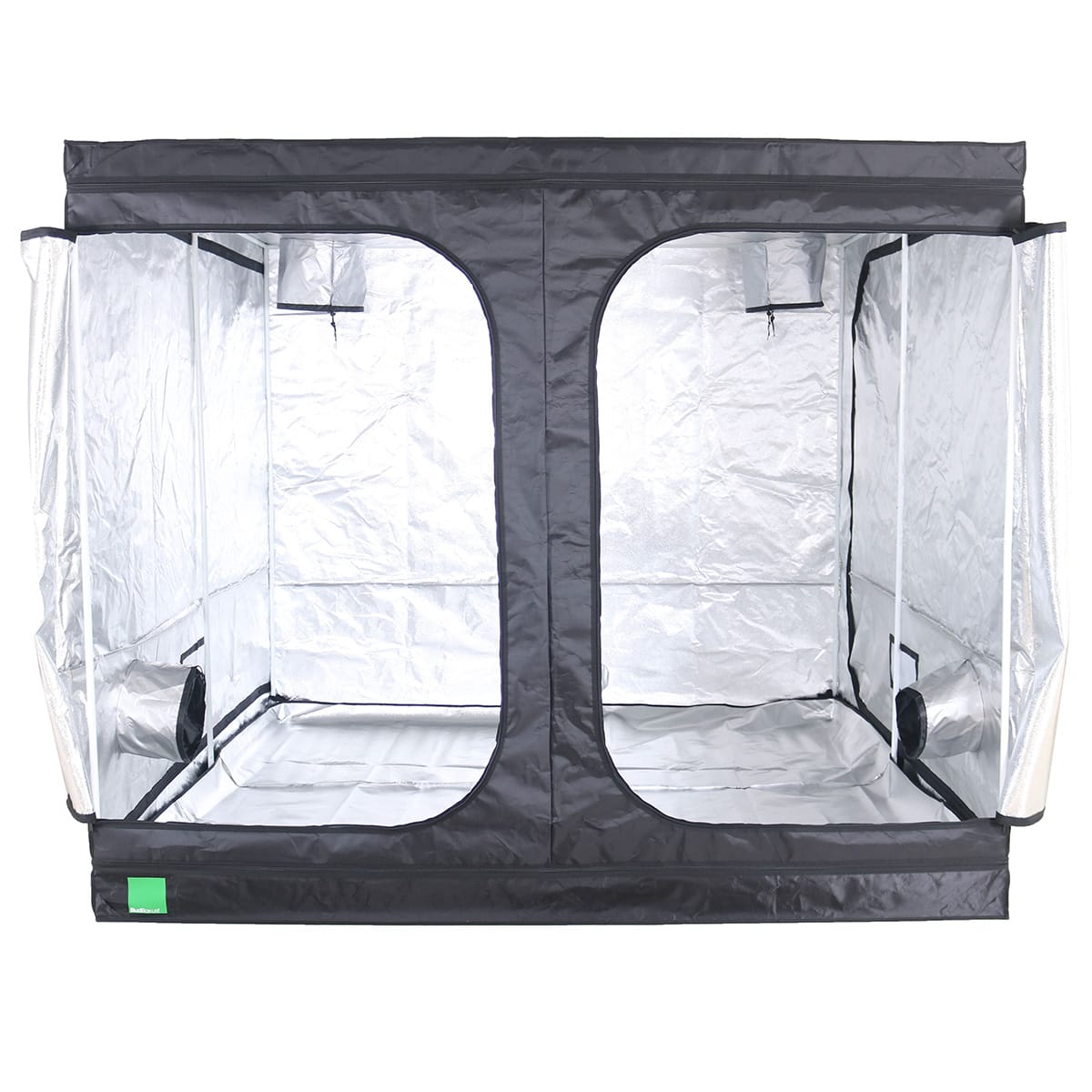
Build a grow room the right way with this step-by-step guide from The Horticulture Company. We cover space planning, ventilation, lighting and everything else you need for a successful indoor grow.
Knowing how to build a grow room is one of the most useful skills for any indoor grower. Building a functional indoor grow room isn’t as complicated as it sounds — but getting the fundamentals right from the start saves a lot of frustration later. I’ve helped many growers set up indoor growing spaces, and the most common mistakes happen at the planning stage, before any equipment is purchased.
This guide walks through every key decision in the right order, with practical recommendations based on what actually works in UK growing conditions.
A practical guide to setting up an indoor grow room or grow tent, from choosing your space to selecting equipment and growing method.
- Choose the right space
Select a space with stable ambient temperature, access to an electrical socket, and room for your tent or grow room build plus working access. Spare rooms, garages, and loft spaces all work well with the right setup.
- Decide between a grow tent and a built room
A grow tent is faster, more cost-effective, and portable — the right choice for most home growers. A built room (lined with reflective sheeting) suits larger-scale setups or permanent installations where a tent frame is impractical.
- Size your growing space
Match your space to your plant count and training method. A 1.2m x 1.2m tent suits 2–4 medium plants; a 2.4m x 1.2m tent supports 4–6 plants with horizontal training. Factor in equipment space — lights, fans, and ducting all occupy headroom and floor space.
- Choose and hang your grow lights
Select your lighting based on tent size and target PPFD. Hang lights at the manufacturer’s recommended height and connect to a timer set to your desired photoperiod — typically 18 hours light for veg and 12 hours for flower.
- Set up climate control
Install an extraction fan connected to a carbon filter and ducted out of the space. Add a clip or oscillating fan for internal air movement. Set up a thermostat and humidity monitor, and target 22–28°C and 55–70% RH during vegetative growth.
- Choose your growing method and start
Select soil, coco coir, or a hydroponic system based on your experience level and goals. Fill containers, prepare your nutrient solution, and begin your first grow cycle.
Step 1: Choose the Right Space
The space you choose will shape every decision that follows. It needs to be:
- Accessible — you’ll visit regularly for watering, training, and checking plant health
- Sealable — able to be made lightproof and properly sealed with reasonable effort
- Ventilatable — with a route to exhaust hot, humid air and draw in fresh, CO₂-rich air
- Safe — near a suitable electrical supply, away from damp or moisture ingress
Common choices in UK homes include spare rooms, lofts, garages, outbuildings, and large cupboards. Lofts can work well but present real temperature regulation challenges — very hot in summer, very cold in winter. A garage or well-insulated outbuilding often gives better year-round control.
Step 2: Decide Between a Grow Tent and a Built Room
For most home growers, a quality grow tent is the better starting point — even if you have a dedicated room available. Here’s why:
- No permanent modifications required
- Purpose-built reflective interior, pre-fitted with hanging bars and ducting ports
- Easier to dismantle, relocate, or upgrade as your needs change
- Faster to set up — typically a couple of hours rather than several days
A fully built grow room makes more sense for larger-scale setups or long-term permanent installations. Our Tents and Rooms section covers both options.
Step 3: Size Your Growing Space
Measure your available space carefully before purchasing anything. Allow for the tent footprint, at least 30cm clearance on each accessible side, and external space for a reservoir and other equipment.
As a practical starting guide for most UK growers:
- 1–2 plants: 80 x 80cm or 90 x 60cm tent
- 3–4 plants: 120 x 60cm or 120 x 120cm tent
- 6–8 plants: 240 x 120cm tent
Tent height matters as much as floor space. Most grow lights require 30–45cm of clearance above the plant canopy. See our full grow tent size guide for detailed recommendations.
Step 4: Choose Your Grow Lights
LED grow lights
The dominant choice for most indoor growers today. Modern LED fixtures deliver a full spectrum, run at low temperatures, and consume significantly less electricity than equivalent HID lights. Brands like Lumatek, Gavita, and HLG produce fixtures suited to every grow size and budget. A reliable working guide: aim for 200–250W of quality LED per square metre of grow space.
HPS and HID grow lights
High Pressure Sodium and HID lights remain popular with experienced growers chasing maximum yield in well-ventilated spaces. They run hotter and use more electricity than LEDs, but their canopy penetration at the flowering stage is excellent. A dual-spectrum 250W or 600W HPS is a solid, proven choice for larger spaces.
T5 fluorescents and CFLs
Best reserved for propagation — seedlings, cuttings, and mother plants. They don’t deliver the light intensity needed for productive vegetative growth or flowering at any meaningful scale.
Step 5: Set Up Climate Control
Extraction and intake
An extractor fan pulls hot, stale, humid air out of the tent and replaces it with cooler, CO₂-rich fresh air through an intake. Calculate your grow space volume in cubic metres (W × D × H). Your extractor should exchange the full air volume every 1–3 minutes. Inline fans from RVK, Systemair, and RAM are well-proven across UK grow rooms.
Carbon filtration
A carbon filter connected to your extractor removes odours from extracted air. Size it to match your fan — an undersized filter will let odours through even at reduced fan speeds.
Internal air circulation
One or two oscillating fans inside the tent keep air moving around the canopy. This strengthens plant stems, prevents heat pockets, and reduces the risk of mould. Aim for gentle, indirect airflow rather than directing fans straight at plants at high speed.
Temperature and humidity targets
- Temperature: 20–26°C with lights on; 16–20°C with lights off
- Relative humidity: 60–70% RH during vegetative growth; 40–50% RH during flowering
Step 6: Choose Your Growing Method
Soil growing
The most forgiving method for new growers. Quality organic soils from brands like Biobizz All-Mix and Plagron Royal Mix come pre-loaded with nutrients that feed plants for several weeks. An excellent starting point for anyone new to indoor growing.
Coco coir
Coco coir is an inert growing medium that gives you full control over your feeding programme. It drains quickly, provides excellent root aeration, and is very forgiving compared to fully recirculating hydroponic systems. Pair it with a coco-specific nutrient line like Canna Coco or Dutch Pro Coco.
Hydroponics
Hydroponic systems deliver nutrients directly to the root zone via water. Growth rates and yields can be outstanding, but these systems require more monitoring and a solid understanding of EC and pH management. Recommended for growers who have already completed at least one successful soil or coco grow.
Estimated Setup Costs for a UK Beginner
- 120 x 120cm grow tent: £120–£180
- LED grow light (250–300W): £150–£300
- Extraction fan, carbon filter, and ducting kit: £80–£150
- Internal circulation fan: £20–£30
- Digital thermometer/hygrometer: £15–£25
- Growing medium, containers, and first-grow nutrients: £60–£120
Total: approximately £450–£800 for a well-equipped, properly ventilated setup. Most equipment will last through multiple growing cycles.
Frequently Asked Questions
How much electricity does a grow room use?
A 300W LED running 18 hours a day uses approximately 5.4 kWh per day. At current average UK electricity rates this equates to roughly £1.50–£2.00 per day for lighting alone. Running lights at night on a time-of-use tariff can meaningfully reduce this cost.
Can I build a grow room in a rented property?
A grow tent setup requires no permanent modifications and is straightforward for renters. A built grow room involving drilling, fitting extraction ports, or lining walls would typically require written landlord permission before proceeding.
Do I need to soundproof my grow room?
Most inline fans run quietly enough not to be an issue in most homes. If noise is a concern, look for fans with a speed controller and run them at a reduced setting. Acoustic ducting lining and fan silencers are also available if needed.
Need help speccing out your first grow room? Call us on 01926 511151 or browse our grow tents and rooms online.
Related Articles
- Grow Tents and Setups Guide
- Indoor Growing Environment Guide
- The Complete UK Grow Tent Setup Guide
- How to Test and Adjust pH for Indoor Plants
For official horticultural guidance and growing tips, the Royal Horticultural Society (RHS) is an excellent resource for gardeners and indoor growers.
Shop the Products in This Guide
Browse by category: Gorilla Box Grow Tents, Grow Tents and reflective sheeting, Loft Grow Tents, Reflective Sheeting, Secret Jardin Grow Tents, Carbon Air Filters, Ducting and Fittings, Extraction Fans and Kits.
Shop featured products: GORILLABOX DELUXE TENT, GORILLABOX ROOF TENT 1.2 X 1.2 X 1.8 M, WHITE LIGHTITE SHEETING, BUDBOX PRO 1.2 X 2.4 X 2.2 M (SILVER).