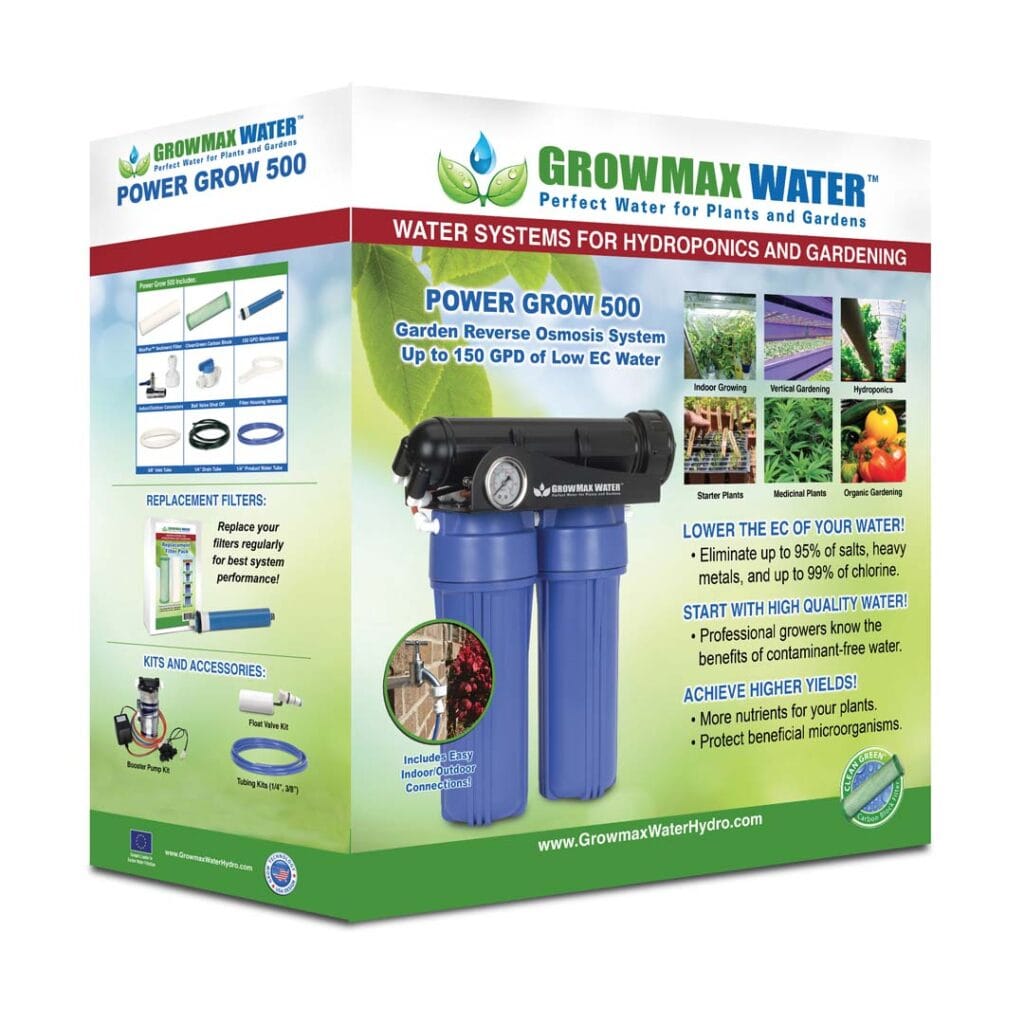

Water quality is the silent variable that separates consistent growers from inconsistent ones. In areas of the UK with hard water — water with high calcium and magnesium carbonate levels — the base mineral content of your tap water can add 0.3–0.8 EC before you even add nutrients. This limits how high you can push your total EC without creating salt toxicity. Filtration and reverse osmosis systems give you complete control over your starting water quality, enabling a fully controlled, consistent nutrient programme regardless of your local water supply.
How Reverse Osmosis Works
Reverse osmosis (RO) uses pressure to force water through a semi-permeable membrane that rejects dissolved minerals, chlorine, chloramines, heavy metals and organic compounds. The result is near-pure water with an EC of 0.0–0.05 and a neutral pH — a blank canvas for nutrient formulation. With RO water, your EC reading reflects only the nutrients you’ve added, giving you precise control over what your plants receive at every growth stage.
A standard RO unit for grow room use consists of a sediment pre-filter, a carbon block filter and the RO membrane itself. A post-filter and optional DI (deionisation) stage can reduce output EC to virtually zero for the most demanding applications. RO units produce water slowly — plan for at least 12–24 hours of production time to fill a 100L reservoir, and consider a storage tank to hold pre-filtered water ready for use.
Carbon Block Pre-Filters
Even without a full RO system, a quality carbon block inline filter removes chlorine and chloramines from tap water — both of which kill the beneficial microorganisms that form the basis of organic and bioponic growing. This simple, inexpensive addition protects your root-zone biology and is strongly recommended for any grower using living soil or biological products.
We have been supplying water filtration solutions to UK growers since 2017. Browse the full filtration range below.
Showing the single result