

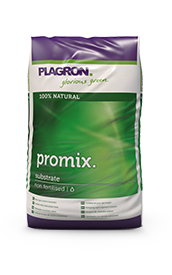
Plagron Promix is a premium soil-based growing medium designed for indoor growers who want excellent results without the complexity of a full hydroponic setup. This guide covers how to use it correctly and what to expect.
Using Plagron Promix correctly will make a real difference to your results. Plagron Promix is a premium peat and perlite growing medium — and if you’re looking for a reliable, professionally formulated substrate for container growing, it consistently delivers. I recommend it to growers who want the water retention benefits of peat-based compost combined with the drainage and aeration that perlite provides, in a blend that’s been engineered specifically for indoor plant cultivation. Whether you’re growing tomatoes, herbs, peppers, or ornamental flowering plants, Promix creates the kind of root environment that supports strong growth from propagation right through to harvest.
What Is Plagron Promix?
Promix is a peat-based growing medium made from a carefully balanced blend of peat moss, perlite, and organic additives. It’s designed for container growing — pots, fabric pots, and grow bags — and is not suitable for hydroponic or soilless systems where the medium would need to be inert.
The combination of ingredients gives Promix a characteristic that’s difficult to achieve with garden compost or single-component media: excellent water retention alongside genuinely good drainage and aeration. The perlite content creates air pockets within the mix that prevent compaction and keep oxygen available to roots, while the peat holds moisture evenly without becoming waterlogged. The neutral pH means nutrients remain freely available throughout the growing cycle without regular pH correction becoming an issue at the media level.
How to Use Plagron Promix
There’s no dosage calculation required — Promix is a growing medium, not a nutrient solution. The process is straightforward:
- Fill your containers with Promix, leaving a few centimetres at the top for watering
- Pre-moisten the medium before transplanting — Promix should be evenly damp but not waterlogged before plants go in
- Transplant your seedlings, cuttings, or young plants directly into the filled containers
- Water as normal throughout the grow — the medium’s structure manages moisture-to-oxygen balance in the root zone
- Begin liquid feeding once the plant has established its root system in the new medium (usually after the first watering or two)
Container Recommendations
Promix performs well in all container types, but performs particularly well in fabric pots. The air-pruning effect of fabric pots encourages a highly branched root structure, and Promix’s airy texture makes it ideal for this growing style. For standard plastic pots, ensure adequate drainage holes are present — Promix holds water well and doesn’t need the help of a poorly drained pot to retain moisture.
Watering With Plagron Promix
One of the things growers appreciate most about Promix is how forgiving it is with watering. The perlite content prevents the kind of overwatering issues that plague denser, peat-heavy composts — roots stay oxygenated even in slightly wetter conditions. That said, best practice is still to allow the top few centimetres to partially dry between waterings rather than keeping the medium continuously saturated.
A useful way to gauge watering frequency is the lift test: pick up your pot after watering and note the weight, then pick it up again before the next watering. When the pot feels noticeably lighter, it’s time to water. This works particularly well with fabric pots.
Nutrient Feeding With Promix
Plagron Promix contains a base level of nutrients but is designed to be used with liquid feed throughout the growing cycle. The initial nutrient charge will support young plants for the first week or two after transplanting. After this, begin feeding with a balanced liquid nutrient schedule appropriate for your plant type and growth stage.
Promix works with all base nutrient brands — Plagron’s own liquid feeds pair naturally with it, but any quality indoor nutrients are compatible. Typical EC targets for plants grown in Promix:
- Seedling / early veg: 0.6–1.0 EC
- Vegetative: 1.0–1.6 EC
- Bloom: 1.4–2.0 EC (depending on plant type and strain)
- Flush: Plain water or very low EC flush solution
Full-Cycle Use
Promix is suitable for use from the propagation stage through to harvest. You can use it for rooted cuttings or seedlings, run plants through the full vegetative and flowering periods in the same containers, and harvest without needing to change substrate mid-grow. This makes it particularly convenient for growers who prefer a straightforward, single-medium system.
What Plagron Promix Is Not Suitable For
Promix is not suitable for hydroponic or soilless systems where the medium needs to be chemically inert (such as NFT, DWC, or recirculating hydro). Its nutrient content and organic matter make it unsuitable as a hydroponic substrate. For coco-based systems, Plagron’s Coco Perlite or similar inert coco media would be the appropriate choice.
Available Sizes
Plagron Promix is available in 50 litre bags, making it easy to fill multiple containers in a single session. For large grow rooms with multiple fabric pots or containers, buying in bulk reduces cost per litre significantly.
Frequently Asked Questions
Does Plagron Promix contain perlite already?
Yes — Promix is a pre-mixed blend that includes perlite as part of its formulation. You don’t need to add extra perlite unless you specifically want a more free-draining mix for plants that prefer particularly dry conditions between waterings.
Can I reuse Plagron Promix?
Technically yes, but performance declines with reuse. Peat-based media compacts over time, reducing the aeration that makes Promix effective. The organic matter also breaks down, changing the water-retention characteristics. For best results, use fresh Promix with each new grow.
What pH should I water with when using Promix?
Promix has a near-neutral pH. A feed water pH of 6.0–6.5 is ideal for most plants grown in Promix. This range ensures that the full spectrum of nutrients — including calcium, magnesium, iron, and manganese — remains readily available in the root zone.
Can I use Plagron Promix outdoors?
Yes — Promix works well for outdoor container growing, raised beds, and large planter boxes. Its drainage characteristics are particularly useful outdoors, where rainfall can waterlog less well-structured media. For in-ground outdoor use, mixing it with garden soil improves structure and aeration.
Where can I buy Plagron Promix in the UK?
We stock Plagron Promix alongside the full Plagron nutrients and growing media range. We’ve been a UK Plagron stockist since 2009 and can advise on the best Plagron setup for your specific growing situation.
Related Articles
Further Reading From The Horticulture Company
For more expert growing guides, our nutrients and additives guide explains how to build an effective feed programme, while our LED grow lights comparison and grow tents guide help you optimise your setup. The indoor growing environment guide covers temperature, humidity and CO₂, and the complete UK grow tent guide takes you through setup from scratch.
For authoritative guidance on plant nutrition and health, the Royal Horticultural Society publishes evidence-based growing advice used by professionals and hobbyists alike. Visit The Horticulture Company’s store in Kenilworth, Warwickshire, or browse our full range of products and guides online.
Shop the Products in This Guide
Shop featured products: PLAGRON PROMIX 50 LITRE.