

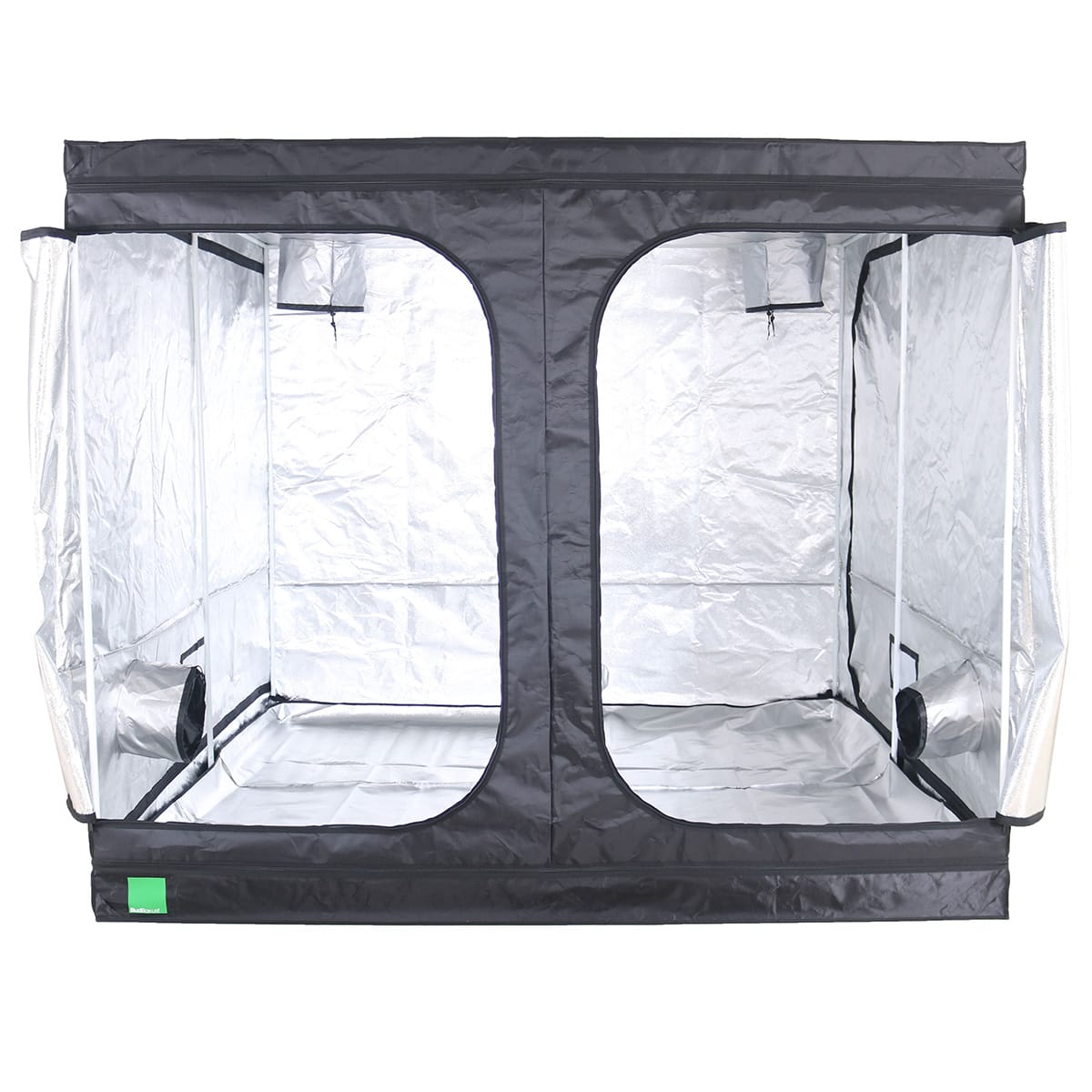
This indoor growing environment guide covers everything you need to control temperature, humidity, CO2, and airflow for a high-performing indoor grow.
Of all the variables that determine how well your plants perform indoors, environment is the most underestimated. Nutrients, lighting, and growing medium get most of the attention — but temperature, humidity, airflow, and CO2 concentration are what determine whether your plants can actually use those inputs effectively. Get the environment wrong and you’ll be fighting slow growth, disease pressure, and nutrient problems regardless of how good your feeding programme is. Get it right and plants almost look after themselves. This guide covers everything you need to know.
Temperature — The Foundation of Plant Performance
This indoor growing environment guide is your complete resource for indoor growing success. Temperature affects virtually every biological process in a plant — enzyme activity, water uptake, photosynthesis rate, and transpiration. Plants grown outside their optimal temperature range slow down, become more susceptible to disease, and use nutrients and water less efficiently.
Target temperature ranges at canopy level:
- Lights on / daytime: 22–28°C — the sweet spot for most crops. 24–26°C is ideal for the majority of fruiting vegetables and flowering plants.
- Lights off / night: 18–22°C — a temperature drop of 4–8°C between day and night is natural and beneficial. Avoid drops below 15°C, which stresses most warm-season crops.
- Root zone: 18–22°C — root zone temperature is often overlooked but critical. Cold roots dramatically reduce uptake of water and nutrients even when air temperature is correct.
Common temperature problems and causes:
- Too hot (>30°C): Usually caused by insufficient extraction for the heat load of your lights. Add extraction capacity, raise your light, or switch to a more efficient LED that generates less heat per watt.
- Too cold (<18°C): Common in winter or in poorly insulated outbuildings. A small fan heater on a thermostat or a tube heater provides low-cost temperature control during lights-off periods.
Humidity and VPD — The Science of Moisture Management
Relative humidity (RH) is the percentage of moisture in the air relative to its maximum capacity at that temperature. Managing humidity correctly is one of the most impactful things you can do for plant performance — and most indoor growers don’t think about it nearly enough.
Target humidity ranges by growth stage:
- Propagation / clones: 80–90% — cuttings need high humidity to prevent wilting before roots develop
- Seedling / early veg: 65–75% — slightly lower than propagation but still high enough to support young plants
- Vegetative growth: 55–70% — active, healthy growth in this range
- Flowering: 40–55% — critical to reduce as flowers develop to prevent botrytis (grey mould) and powdery mildew
- Late flower (final 2 weeks): 35–45% — lower humidity encourages resin development and reduces disease risk during the most vulnerable period
Understanding VPD (Vapour Pressure Deficit)
VPD is a more precise way to think about the relationship between temperature and humidity. It describes the difference between the amount of moisture currently in the air and the amount it could hold at saturation. Plants transpire in response to VPD — too high and they close stomata and stop growing; too low and they transpire so little that nutrient uptake slows significantly.
Target VPD ranges:
- Propagation: 0.4–0.8 kPa
- Vegetative: 0.8–1.2 kPa
- Flowering: 1.0–1.5 kPa
A VPD chart combining temperature and humidity readings makes it easy to check whether your environment falls within the target zone. Many modern environmental controllers display VPD directly.
Airflow and Extraction
Adequate airflow serves multiple critical functions: it removes heat from the grow space, maintains even temperature and humidity distribution, strengthens stems through gentle mechanical stimulation, and supplies fresh CO2 to the canopy. Without sufficient airflow, you’ll see heat stratification, humidity pockets, and plants that fail to develop the stem strength to support their own weight.
Extraction Fan Sizing
Your extraction fan should be able to exchange the entire air volume of your tent at least once per minute — ideally every 30–45 seconds when running with a carbon filter (which adds resistance). To calculate the minimum fan size:
- Tent volume (m³) = length × width × height
- Required airflow (m³/h) = tent volume × 60 × 1.5 (to account for filter resistance)
Example: A 1.2m × 1.2m × 2.0m tent has a volume of 2.88m³. Minimum extraction = 2.88 × 60 × 1.5 = 259m³/h. A 250–300m³/h fan is the appropriate choice for this space.
Use a fan speed controller to reduce the fan to minimum speed at lower temperatures, preventing the tent from becoming too cold in winter while maintaining the ability to run at full speed during warm periods.
Circulation Fans
Beyond extraction, internal circulation fans are essential for distributing air evenly throughout the grow space. Without them, hot air stratifies near the light, humidity pockets form in the canopy, and plants in the centre of the tent grow differently to those at the edges.
At minimum, use one clip-on oscillating fan per 1.2m × 1.2m section of canopy. Aim for gentle movement of leaves — if leaves are violently thrashing, reduce fan speed. The goal is a constant, gentle breeze that strengthens stems without causing wind stress.
CO2 and Plant Growth
Ambient CO2 levels outdoors are approximately 400 ppm (parts per million). Plants use CO2 in photosynthesis, and can benefit from elevated levels — but only when all other factors are already optimised. CO2 supplementation is not a shortcut; it’s an advanced technique for growers who have already maximised light intensity, temperature, humidity, and nutrients.
At elevated CO2 levels (1,000–1,500 ppm), plants can use higher light intensities more efficiently and grow noticeably faster. However, CO2 supplementation requires:
- High-intensity lighting (at least 600–800 µmol/m²/s PPFD) to actually use the additional CO2
- Sealed or near-sealed grow space — CO2 dissipates quickly if extraction is running constantly
- Slightly elevated temperature (26–30°C) — photosynthesis runs faster at higher temperatures when CO2 is abundant
- CO2 controller and monitor to maintain levels precisely — too much CO2 (above 2,000 ppm) is counterproductive and potentially dangerous in an occupied space
For most growers, ensuring fresh air exchange from outside the tent is more than adequate. Natural CO2 replenishment from outside air is sufficient when extraction is pulling in fresh air from outside the growing space.
Monitoring Your Environment
At minimum, every grow space needs a thermometer/hygrometer — a combined unit that displays both temperature and humidity, ideally with min/max memory so you can see overnight lows and daytime peaks without constant monitoring. Digital units with separate probe heads allow you to read canopy-level conditions while keeping the display outside the tent.
For more comprehensive monitoring and control, an environmental controller automates your extraction fan, heater, humidifier, and dehumidifier in response to real-time conditions. Brands like Lumii, Systemair, and Titan Controls make controllers at a range of price points. These become particularly valuable in larger grows or in spaces with significant seasonal temperature variation.
Common Environmental Problems and Solutions
- High humidity in late flower: Increase extraction speed, add a dehumidifier, and improve air circulation through the canopy. Defoliating dense growth improves airflow and significantly reduces botrytis risk.
- Temperature spikes during lights-on: Upgrade extraction capacity, or switch to a more efficient LED to reduce heat load. Set extraction to maximum during peak temperature hours.
- Cold nights causing slow growth: Install a timer-controlled tube heater or fan heater in the tent to maintain minimum temperature during lights-off. Ensure your light schedule matches the warmer part of the day.
- Dry air (low humidity) in veg: A small humidifier in or near the tent resolves low humidity quickly. In very dry environments, a cool mist humidifier on a hygrostat automates this effectively.
Frequently Asked Questions
The ideal indoor environment during vegetative growth is 22–26°C with 55–70% relative humidity. During flowering, maintain the same temperature range but reduce humidity to 40–55% to prevent mould. These ranges represent the sweet spot where most crops grow fastest, feed most efficiently, and remain most resistant to disease.
Increase your extraction fan speed first — pulling more humid air out is the fastest and cheapest fix. If that is not enough, add a dehumidifier inside or near the tent, improve canopy airflow with additional circulation fans, reduce plant density, or defoliate to improve air movement. Address extraction before buying additional equipment.
No — for most indoor growers, a CO2 system is unnecessary and not worth the cost. CO2 supplementation only produces meaningful gains when light intensity already exceeds 600 µmol/m2/s and all other environmental factors are fully dialled in. Ensuring your extraction pulls in fresh air from outside the growing area provides ample ambient CO2 at around 400ppm for healthy plant growth.
We stock a full range of environmental control equipment including extraction fans, fan controllers, environmental controllers, thermometers, hygrometers, humidifiers, dehumidifiers, and carbon filters. Browse our full range online, or contact our team to spec the right system for your tent size and growing goals.
For official horticultural guidance and growing tips, the Royal Horticultural Society (RHS) is an excellent resource for gardeners and indoor growers.
Grow Tent Ventilation: The Complete Setup Guide
Grow tent ventilation is the single system that beginners most consistently get wrong — and the one most likely to cause a grow to fail. A correctly set up ventilation system controls temperature, humidity, odour and CO2 simultaneously. Here is exactly how to set it up.
The Negative Pressure System Explained
The standard grow tent ventilation approach is a negative pressure air exchange system. Hot, humid, odour-laden air is extracted from the top of the tent via a carbon filter, ducting, and an inline extraction fan. Fresh CO2-rich air enters passively through the lower intake ports. The slight negative pressure created by the extraction fan causes the tent walls to bow inward slightly — this confirms no unfiltered air is escaping and the carbon filter is working correctly. If walls bow outward, you have a problem: check all port seals and zip runs.
Passive vs Active Intake
Passive intake (the most common approach) relies on the negative pressure created by your extraction fan to draw fresh air through open intake ports at the base of the tent. Open at least two lower ports to allow sufficient airflow without restricting the fan. Cover open ports with fine mesh to prevent pest ingress.
Active intake uses a second, smaller fan to push fresh air in through the lower ports. This is typically used in larger grow rooms or when passive intake is restricted by long duct runs. For most home tent growers, passive intake is sufficient and simpler to manage.
How to Set Up Grow Tent Ventilation Step by Step
- Mount the carbon filter inside the tent at the top — hot, humid air rises, so filtering happens most efficiently at the highest point. Connect the carbon filter output directly to the inlet of your inline fan using a short section of acoustic ducting.
- Route the inline fan output outside the tent via the highest exhaust port. Keep the ducting run as short and straight as possible — every 90-degree bend reduces airflow by approximately 10%.
- Open two or more lower intake ports to allow passive air entry. These should be on opposite sides of the tent where possible to encourage cross-flow ventilation.
- Position a circulation fan at canopy level pointing across the tops of the plants. This prevents hot spots and humidity pockets forming within the canopy and strengthens stems through gentle mechanical stimulation.
- Connect a fan speed controller to your inline fan. Run at minimum speed during cool periods; increase to full speed during warm weather or late flower when humidity control is critical.
- Verify negative pressure — tent walls should pull inward slightly when the system is running. If not, increase fan speed or check for unsealed gaps around ports and zips.
Ducting: Keeping Noise and Heat Loss Low
Cheap rigid ducting transfers fan vibration directly to walls and poles, creating noise. Acoustic ducting — a flexible duct with internal sound-absorbing insulation — is worth the extra cost in most setups. Insulated ducting also reduces heat loss when ducting passes through cold spaces such as lofts in winter. Use the shortest possible duct run and avoid sharp bends. If a bend is unavoidable, use a smooth 45° elbow rather than a 90° turn to preserve airflow.
Grow Tent Ventilation Troubleshooting
| Problem | Likely Cause | Fix |
|---|---|---|
| Tent walls bowing outward | Port or zip seal failure; fan too weak | Seal all unused ports; increase fan speed; check zip runs for gaps |
| Smell escaping the tent | Carbon filter bypassed or exhausted | Check filter connection; replace filter if >12–18 months old; seal all gaps |
| High humidity despite fan running | Fan undersized; no circulation fan; heavy canopy | Upgrade extraction; add circulation fan; defoliate lower growth |
| Temperature too high (>30°C) | Fan undersized for heat load; light too close | Increase fan size; raise light; switch to more efficient LED |
| Excessive fan noise | Rigid ducting transmitting vibration | Switch to acoustic ducting; use anti-vibration mounts on fan |
| Temperature too cold at night | Fan running too fast; unheated space | Reduce fan speed at night; add a timer-controlled heater |
Further Reading
Shop the Products in This Guide
Browse by category: Carbon Air Filters, CO2 Enrichment Kit, Ducting and Fittings, Extraction Fans and Kits, Fan Speed Controllers, Humidity Control.
Shop featured products: CAN-FILTER INLINE FILTER, MOUNTAINAIR AIR FILTER, DUTCH TOUCH PRO CARBON FILTER, CARBOAIR CA50 CARBON FILTER.