

Understanding why fabric pots are better for plants helps you diagnose and fix growing problems faster. Updated May 2026 | Reading time: approx. 6 minutes
I’ve grown plants in just about every container available over the years — terracotta, standard black plastic, fabric grow bags, air pots. And if there’s one switch that consistently makes a measurable difference to root health and overall yield, it’s moving from plastic to fabric pots.
This isn’t marketing. There’s a genuine, well-documented reason that fabric pots — also called fabric plant pots, fabric grow bags, or fabric grow pots — have become the preferred choice for serious indoor growers. In this guide I’ll explain exactly why, compare them honestly against plastic containers, and help you choose the right size for your grow.
What Are Fabric Pots?
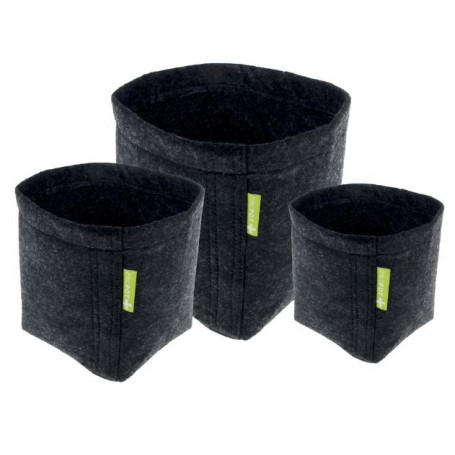
Fabric pots are growing containers made from a breathable, porous geotextile material — typically crafted from recycled plastic bottles, natural fibres such as hemp or cotton, or a blend of both. Unlike a solid plastic pot, every surface of a fabric pot is permeable. Air, water, and excess heat can all pass through the walls freely, which fundamentally changes how your root zone behaves.
They’re available in a wide range of sizes — from compact 1-litre pots for propagation through to 50-litre and larger containers for mature plants and outdoor beds. At The Horticulture Company we stock leading brands including Root Pouch Grey Fabric Pots, Garden Highpro Square Fabric Pots, and Root Nurse Fabric Pots.
1. Air Pruning: The Root Revolution
This is the single biggest reason to switch, and it’s worth understanding properly rather than just accepting the headline claim.
In a standard plastic pot, roots grow outward until they hit the solid wall. With nowhere to go, they begin circling the inside of the container — a process called root circling or root-binding. These long, spiralling roots are inefficient. They can’t absorb nutrients or water nearly as well as a dense, branching root system, and they place real stress on the plant.
In a fabric pot, something different happens. When a root tip reaches the porous fabric wall and contacts the air outside, it senses the dry environment and naturally stops elongating. The tip essentially prunes itself. Rather than circling, the plant responds by generating new lateral roots throughout the entire pot — producing a far denser, more fibrous root system.
Think of it this way: in a plastic pot you get one long motorway with no exits. In a fabric pot you get a whole network of routes — far more pathways for nutrients and water to travel along. Research data consistently shows that plants grown in fabric pots develop up to 35% more root biomass than equivalent plants in plastic. More roots means better nutrient uptake, faster growth, and heavier harvests.
2. Superior Aeration — Oxygen Where It Matters Most
Roots need oxygen just as much as they need water and nutrients. In a plastic pot, oxygen exchange happens only through the top of the substrate and through drainage holes at the base. The rest of the root zone can become starved of oxygen — particularly once roots have colonised the outer edges of the pot.
In a fabric pot, oxygen passes through all sides of the container continuously. Studies from Cornell University showed dissolved oxygen levels in the substrate can run up to 300% higher in fabric pots compared with equivalent plastic containers. Higher oxygen levels directly support:
- Beneficial microbial activity in the growing medium
- Faster breakdown and uptake of nutrients
- Stronger, healthier root cells less susceptible to disease
- Quicker recovery after heavy feeding or environmental stress
3. Drainage, Moisture Control and the End of Root Rot
Overwatering remains one of the most common causes of plant failure in UK grow rooms — particularly during cooler, darker months when evaporation rates drop. A plastic pot holds moisture at the base long after a watering, creating anaerobic, waterlogged conditions that are perfect for Pythium (root rot) and other fungal pathogens.
Fabric pots drain freely from every surface. Excess water passes through the sidewalls as well as the base, and the open structure means air moves through the substrate even between waterings. Your growing medium dries more evenly and predictably.
A practical note: fabric pots do dry out faster than plastic, particularly in warm environments or under high-intensity lighting. In my experience you’ll typically need to water 20–30% more frequently than you would in an equivalent plastic pot. This isn’t a disadvantage — it gives you more control over your feeding schedule — but it’s worth factoring into your routine from the outset.
4. Temperature Regulation in the Root Zone
This is one of the less-discussed benefits of fabric pots but it’s genuinely important, especially in summer or if you’re running high-wattage lighting close to the canopy. Black plastic pots absorb and retain heat, and root zone temperature can creep well above the ideal range (roughly 18–22°C for most crops). Root zone heat stress suppresses growth, disrupts nutrient uptake, and weakens overall plant health.
Fabric pots breathe, and that breathing creates a natural evaporative cooling effect. Heat dissipates through the walls rather than building up inside. In practice this keeps root zone temperatures noticeably cooler and more stable — a real advantage in sealed or poorly ventilated grow rooms.
5. Eco-Friendly and Built to Last
Most quality fabric pots — including Root Pouch and Root Nurse — are manufactured from recycled plastic bottles and natural fibres. Choosing fabric over virgin plastic is a practical step towards a more sustainable growing practice. Contrary to what some growers assume, fabric pots are reusable across multiple growing seasons. A good-quality pot will hold its structure and breathability for three or more years with proper care. Between grows, they can be emptied, washed, and folded flat for compact storage — a significant practical advantage over bulky stacks of plastic containers.
Fabric Pots vs Plastic Pots: An Honest Comparison
| Feature | Fabric Pots | Plastic Pots |
|---|---|---|
| Air Pruning | ✓ Automatic | ✗ Roots circle |
| All-Round Drainage | ✓ Excellent | ✗ Base only |
| Root Oxygen Levels | ✓ Up to 300% higher | ✗ Limited |
| Heat Regulation | ✓ Breathable — stays cool | ✗ Heat builds in summer |
| Overwatering Risk | ✓ Very low | ✗ Higher |
| Eco Credentials | ✓ Recycled materials | ✗ Virgin plastic |
| Reusability | ✓ Multiple seasons | ✓ Durable long-term |
| Storage | ✓ Folds flat | ✗ Bulky when empty |
| Yield Improvement | ✓ Up to +22% vs plastic | — Baseline |
Do Fabric Pots Actually Improve Yield?
Yes — meaningfully so, though results vary depending on crop, grow setup, and technique. Royal Queen Seeds testing reported an average +22% yield improvement when growing in fabric pots versus equivalent plastic containers of the same volume. Separate data found that plants grown in 5-gallon fabric pots produced yields equivalent to plants in 7–8 gallon plastic pots. The mechanism is straightforward: a healthier, more extensive root system leads to more efficient nutrient and water uptake, which translates into stronger vegetative growth and heavier harvests.
Choosing the Right Fabric Pot Size
- 1–3 litres: propagation, small seedlings, herbs
- 5–7 litres: compact plants, short-season crops, autoflowers
- 10–15 litres: standard indoor plants, most vegetable crops
- 20–30 litres: larger plants, longer growing cycles, tomatoes
- 40–50+ litres: mature specimen plants, outdoor beds, trees
If in doubt, err on the side of a slightly larger pot. The additional root volume and the air-pruning effect will reward you.
Our Recommended Fabric Pot Brands
Root Pouch Grey Fabric Pots
Root Pouch are a well-established name in the fabric pot world, using a blend of recycled plastic bottles and natural fibres. Their grey pots are a popular all-round choice — robust, reusable, and available in a comprehensive size range. The grey colour is also more reflective than black, which helps slightly with root-zone heat management.
Garden Highpro Square Fabric Pots
Square fabric pots make much more efficient use of available floor space in a grow tent or grow room. Garden Highpro’s square fabric pots maintain all the breathability benefits of standard fabric while giving you a more efficient floor footprint.
Root Nurse Fabric Pots
Root Nurse pots have gained a strong following among UK indoor growers for their build quality and consistent performance across multiple growing seasons. Sturdy, well-made, and available in a practical range of sizes for hobbyist and commercial growers alike.
Frequently Asked Questions
Frequently Asked Questions
Yes — fabric pots consistently improve yield compared to equivalent plastic containers. Royal Queen Seeds testing reported an average +22% yield improvement with fabric pots. Plants in 5-gallon fabric pots produce yields equivalent to those in 7–8 gallon plastic pots. The mechanism is air pruning, which produces a denser, healthier root system that drives more efficient nutrient uptake.
A quality fabric pot lasts three to five growing seasons with reasonable care. Rinse between grows and allow to dry fully before storage to prevent mould. Root Pouch and Root Nurse pots are particularly durable — their reinforced fabric holds up well to repeated use and washing.
Yes — fabric pots work well with all common growing media. They are particularly effective with coco coir, where the combination of fabric aeration and coco’s natural drainage creates excellent root zone conditions. They also work well in soil and with inert substrates like perlite.
Yes — fabric pots are widely used in outdoor and greenhouse growing. The breathability that benefits indoor grows is equally useful outside: it regulates root temperature on hot days and prevents waterlogging in wet conditions. Many outdoor growers use fabric pots on patios, terraces, and balconies.
Yes, indoors. Because fabric pots drain from all surfaces — not just the base — water can seep through the sides. A tray or saucer protects your floor and lets you monitor run-off pH and EC, which is useful for tracking root zone conditions.
Related Articles
- Plant Propagation Guide — hub page
- Nutrients and Additives Guide — for nutrient uptake context
- Do Plants Grow Better in Fabric Pots?
Further Reading From The Horticulture Company
For more expert growing guides, our nutrients and additives guide explains how to build an effective feed programme, while our LED grow lights comparison and grow tents guide help you optimise your growing environment. The indoor growing environment guide covers temperature, humidity and CO₂, and the complete UK grow tent guide takes you through setup from scratch.
For authoritative guidance on plant nutrition and health, the Royal Horticultural Society publishes evidence-based growing advice used by professionals and hobbyists alike. Visit The Horticulture Company’s store in Kenilworth, Warwickshire, or browse our full range of products and guides online.
Shop the Products in This Guide
Browse by category: Autopot Systems, Buckets Tanks and Trays, Fabric Pots, NFT Systems, Organic and Hydroponic Soils, Oxypot DWC.
Shop featured products: AUTOPOT 16MM – 9MM CROSS (NEW STYLE), AUTOPOT MARIX DISC, AUTOPOT XL ROOT CONTROL DISC, AUTOPOT ROOT CONTROL DISC.