
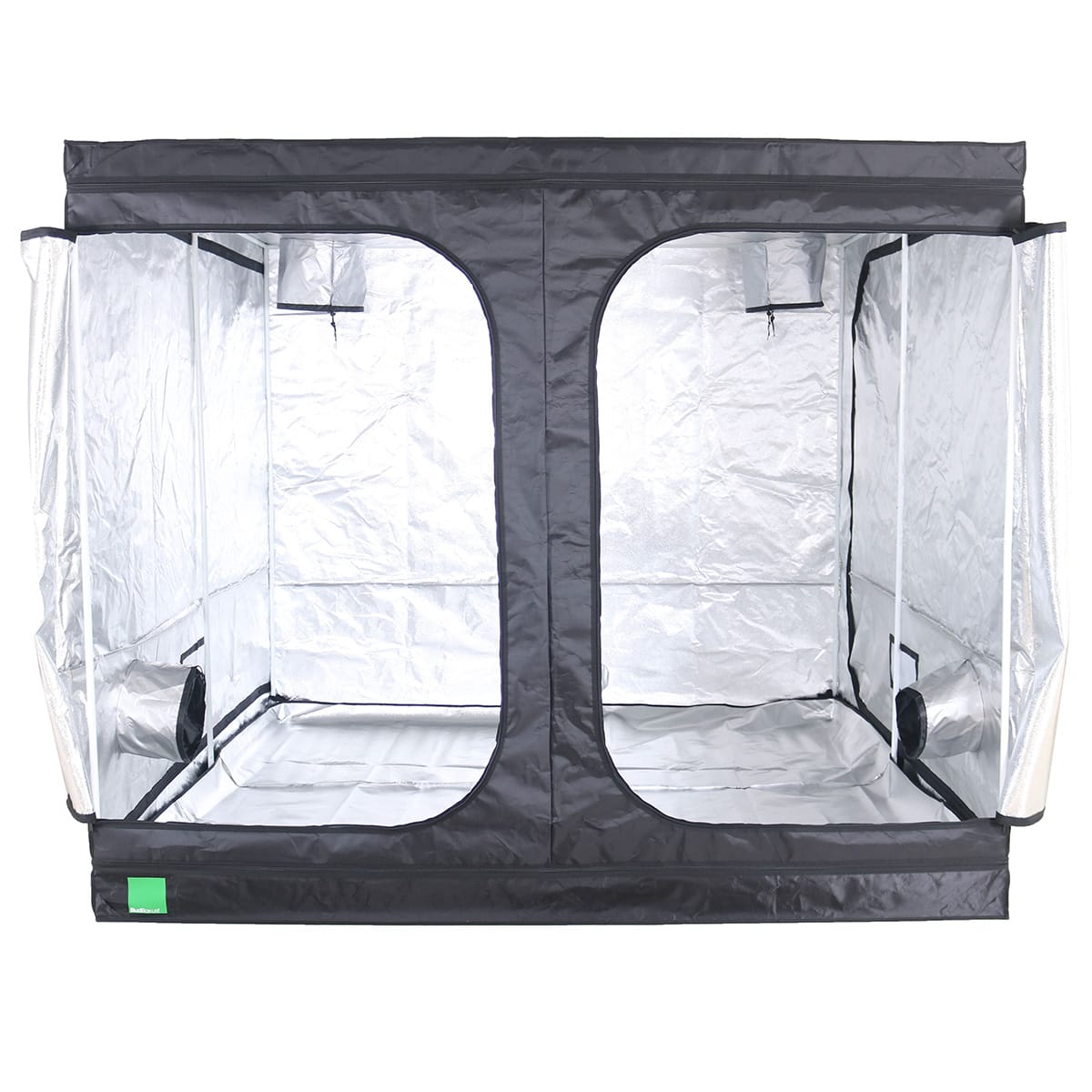
These are the grow tent must haves for indoor growing success — the six pieces of equipment that make the biggest difference to your results, chosen by our experts.
Everything you need to know about grow tent must haves indoor growing is covered in this guide from The Horticulture Company. Setting up an indoor grow for the first time can feel overwhelming. There are hundreds of products, dozens of brands, and endless opinion on what you need versus what you don’t. Over years of helping growers of all experience levels get started and improve their results, I’ve narrowed it down to six things that genuinely make the difference between consistent success and frustrating failure. Get these six right and the rest is refinement.
1. A Quality Grow Light That Matches Your Space
Everything else in your grow — nutrients, substrate, technique — depends on having adequate light. Plants run on photosynthesis, and photosynthesis requires the right intensity and spectrum of light delivered consistently throughout the growth cycle.
The most important thing to understand about choosing a light is that wattage equivalency claims are largely meaningless. What matters is PPFD — the intensity of usable light (in µmol/m²/s) actually reaching your canopy — and whether that coverage is consistent across your full growing footprint. A well-chosen LED from a quality brand like Lumatek, Gavita, or Maxibright will outperform a cheaper light at a nominally higher wattage every time.
Match your light to your tent size. For a 1.2m × 1.2m tent, a 400–600W LED provides the right intensity for flowering. For smaller tents, scale down proportionally. Always check the manufacturer’s PPFD map — this shows real light distribution at a specific height, which tells you far more than any coverage claim.
See our full grow lights guide for a complete breakdown of technologies, spectrums, and how to choose the right system.
2. Proper Extraction and Airflow
Your extraction system is your environmental control system. It removes heat from the grow space, exchanges stale air for fresh CO2-rich air from outside, and — with a carbon filter — manages odour. Without adequate extraction, temperature and humidity creep out of range and plant performance suffers directly.
Size your fan to exchange the tent’s full air volume at least once per minute — with more capacity than you think you need to account for carbon filter resistance. For a 1.2m × 1.2m × 2m tent, a 250–300m³/h fan is the minimum starting point. Pair it with a fan speed controller so you can reduce noise and running costs at lower temperatures without losing the ability to ramp up when needed.
Alongside extraction, internal circulation fans are non-negotiable. A clip-on oscillating fan keeping air moving gently across the canopy strengthens stems through mechanical stimulation, prevents humidity pockets, and distributes CO2 and temperature evenly across the growing area.
3. Accurate pH and EC Meters
If I had to name the single piece of equipment that prevents more problems than any other, it would be a quality pH meter. The majority of nutrient deficiency symptoms growers see — yellowing, spots, tip burn, slow growth — are not caused by absent nutrients. They’re caused by pH being outside the correct range, locking nutrients in forms that roots can’t absorb. You can feed perfectly and still see deficiencies if your pH is wrong.
Target pH by medium: 6.0–6.5 for soil; 5.8–6.2 for coco; 5.5–6.1 for hydroponic systems. Check and adjust the pH of your nutrient solution every time you water — not occasionally, but every single time.
An EC (electrical conductivity) meter tells you the total dissolved nutrient concentration in your solution — too low means underfeeding, too high risks salt stress. Together, pH and EC give you complete visibility of what you’re actually putting into your plants rather than what you think you’re putting in.
Invest in quality instruments from calibrated brands — cheap meters drift significantly and give false readings. Calibrate regularly using pH 4.0 and 7.0 buffer solutions.
4. The Right Growing Medium for Your Style
Your growing medium is the root environment, and the root environment is the foundation of everything. There are three main options for indoor growing, and each suits a different approach:
- Soil / peat-based media: The most forgiving choice. Quality mixes like Canna Terra Professional Plus or Plagron Promix contain their own nutrient reserves and pH buffering, making them more tolerant of minor feeding errors. Best for beginners and those who prefer hand-watering with fewer interventions.
- Coco coir: Inert and fast-draining, coco requires liquid feeding at every watering but rewards growers with faster growth than soil when managed correctly. Ideal for those who want more control and are willing to monitor EC and pH consistently.
- Hydroponics: Maximum control and maximum speed — plants fed directly in solution grow noticeably faster than in any solid medium. Requires the most attention to EC, pH, and reservoir management but produces the fastest results when dialled in.
Whatever medium you choose, pair it with appropriate containers. Fabric pots are an excellent choice across all media types — their air-pruning effect produces exceptional root architecture, and their drainage prevents overwatering.
5. A Complete Nutrient Programme
Plants need a full spectrum of nutrients at the right concentrations and ratios for each stage of growth. A base nutrient covers the fundamental NPK and most trace elements, but a complete programme also addresses the things most base nutrients undersupply:
- CalMag: Calcium and magnesium are consistently undersupplied — particularly in coco, hydro, and soft water areas. A dedicated CalMag supplement prevents the most common deficiencies in indoor growing.
- Silicon: Strengthens cell walls, reduces stretch, and improves stress resistance. A silicon supplement like Aptus Regulator used from the start of the grow delivers cumulative structural benefits throughout the plant’s life.
- Bloom booster: From week 3–4 of flowering, a PK booster pushes flower density, weight, and aromatic quality beyond what base nutrients alone can achieve.
- Enzymes: An enzyme supplement keeps the root zone clean by breaking down dead root matter before it becomes a disease risk — particularly valuable in organic-containing media.
See our full nutrients and additives guide for a complete walkthrough of building an effective feeding programme.
6. Environmental Monitoring and Control
You can’t manage what you don’t measure. Temperature and humidity directly affect plant transpiration, nutrient uptake, photosynthesis rate, and disease resistance — and they fluctuate constantly in response to lights, extraction, and ambient conditions outside the tent. Without monitoring, you’re growing blind.
At minimum, every grow needs a combined digital thermometer and hygrometer — ideally with a separate probe that sits at canopy level, min/max memory, and a display you can read from outside the tent. This tells you both the current conditions and what happened overnight while you weren’t watching.
Key targets to maintain: 22–28°C during lights-on, 18–22°C during lights-off, and 40–55% relative humidity during flowering (lower is better in late flower). If temperature or humidity consistently sit outside these ranges, address the cause rather than tolerating it — environmental stress is cumulative and compounds over the length of a grow.
For growers running larger spaces or dealing with significant seasonal variation, an environmental controller that automates your extraction fan, heater, and humidifier pays for itself very quickly in improved results and reduced loss to environmental problems.
Bonus: Don’t Skip the Basics
Beyond the six essentials above, a handful of simple practices consistently separate successful grows from difficult ones:
- Keep records: Write down what you feed, when you water, what your pH and EC readings are, and what you observe in the plants. Patterns become obvious over time and problems are far easier to diagnose when you have data.
- Start with fewer plants, managed well: Two well-managed plants in appropriate containers will outperform four cramped, competing plants every time. Give plants the space they need to develop properly.
- Check your plants daily: Early detection of pest, disease, or deficiency problems is everything. Problems that are caught in their first 48 hours rarely become serious; problems discovered a week later can be difficult to reverse.
Frequently Asked Questions
What’s the minimum budget for a complete indoor grow setup?
A functional beginner setup — quality LED, tent, extraction, basic nutrients, pH meter, and containers — can be assembled from around £300–£500 for a 0.8m × 0.8m to 1.0m × 1.0m tent size. This is the range where you’re buying equipment that will actually perform reliably rather than false economy items that need replacing after one grow.
Do I need all six of these things from day one?
Yes — all six are genuinely necessary for a functional indoor grow rather than nice-to-haves. The most common “starter” mistakes are skipping pH measurement (“it’s fine”), skipping proper extraction (“it doesn’t get that hot”), or buying inadequate lighting. Each of these shortcuts creates problems that limit what you can achieve regardless of how well you manage everything else.
Can you help me choose the right equipment for my setup?
Absolutely. Our team has extensive practical growing experience and can recommend the right combination of equipment for your tent size, goals, and budget. Browse our full range of grow tents, grow lights, ventilation equipment, and nutrients online, or get in touch and we’ll help you put together a complete kit.
Related Articles
- Grow Tents and Setups Guide — complete hub
- Indoor Growing Environment Guide
- The Complete UK Grow Tent Setup Guide
- Are Grow Tents Worth It?
- What Size Grow Tent Do I Need?
Further Reading From The Horticulture Company
For more expert growing guides, our nutrients and additives guide explains how to build an effective feed programme, while our LED grow lights comparison and grow tents guide help you optimise your setup. The indoor growing environment guide covers temperature, humidity and CO₂, and the complete UK grow tent guide takes you through setup from scratch.
For authoritative guidance on plant nutrition and health, the Royal Horticultural Society publishes evidence-based growing advice used by professionals and hobbyists alike. Visit The Horticulture Company’s store in Kenilworth, Warwickshire, or browse our full range of products and guides online.
Shop the Products in This Guide
Browse by category: Carbon Air Filters, CO2 Enrichment Kit, Ducting and Fittings, Extraction Fans and Kits, Fan Speed Controllers, Humidity Control.
Shop featured products: CAN-FILTER INLINE FILTER, MOUNTAINAIR AIR FILTER, DUTCH TOUCH PRO CARBON FILTER, CARBOAIR CA50 CARBON FILTER.