

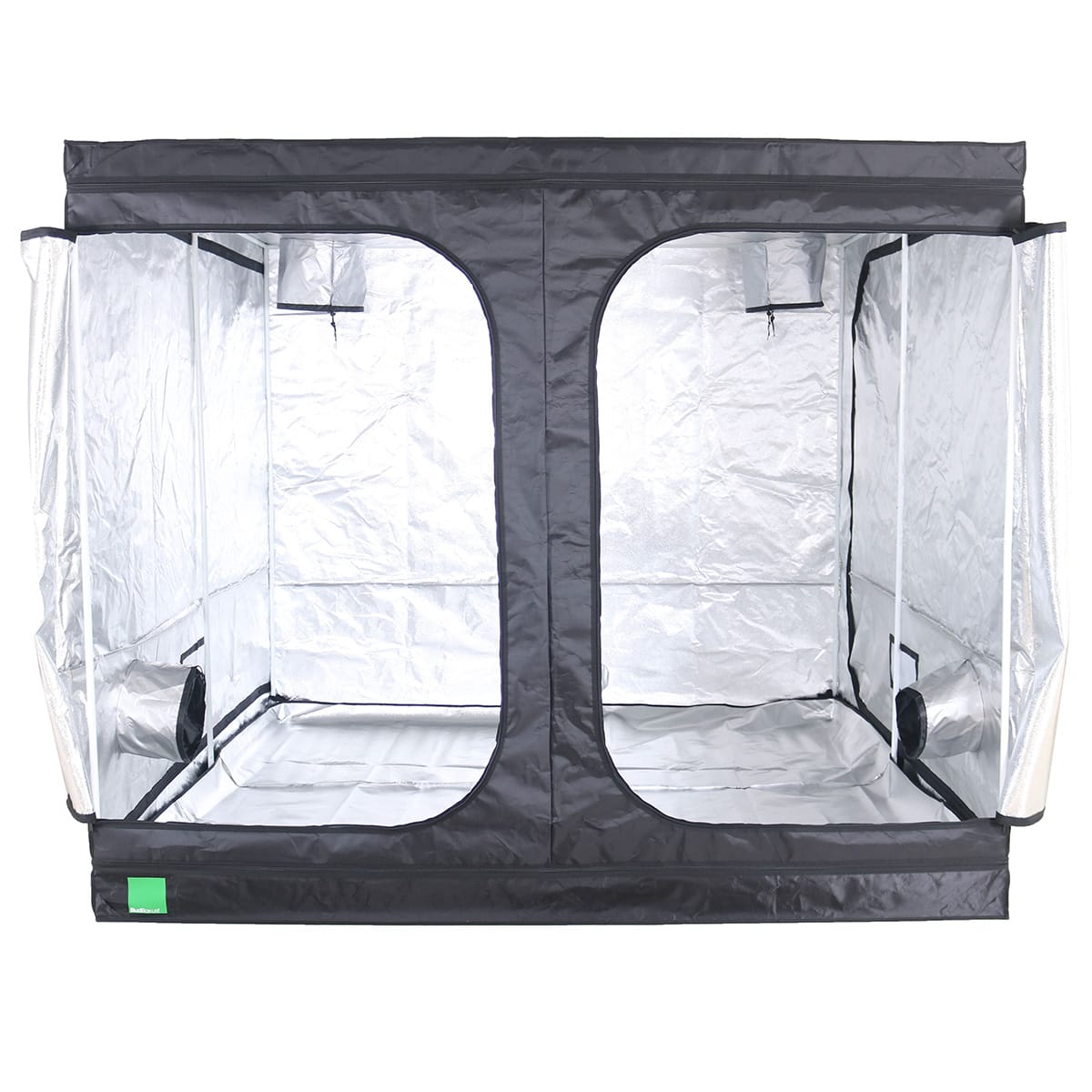
For hydroponics explained for beginners supplies and expert advice, The Horticulture Company is your nearest specialist grow shop. Hydroponics is the practice of growing plants without soil, delivering all the nutrients a plant needs directly through a water-based solution. The core principle is straightforward: instead of relying on soil to supply nutrition, you supply it yourself — precisely, consistently, and in exactly the form your plants can use.
The result is faster growth, higher yields, and better control over your crop than traditional soil cultivation can deliver. Here’s how it works, which system might suit you, and what you need to get started.
Why Grow Hydroponically?
There are several compelling reasons why hydroponics has moved well beyond commercial greenhouses and into UK home growing:
- Faster growth: because nutrients are available immediately at the root zone, plants don’t need to expend energy searching for food through soil. Growth rates in hydroponic systems can be 30–50% faster than equivalent soil grows
- Higher yields: more efficient nutrient uptake and greater root oxygenation consistently produces heavier harvests from the same growing area
- Full control: you decide exactly what your plants eat, when they eat it, and at what concentration — giving you the ability to fine-tune results across every growing cycle
- Water efficiency: recirculating hydroponic systems use significantly less water than conventional growing, since water is continuously reused rather than lost to soil drainage
- No soil-borne pathogens: removing soil from the equation eliminates a major source of root disease, fungus gnats, and other soil-borne problems
What Can Be Grown Hydroponically?
Almost any plant can be grown hydroponically, but certain crops perform particularly well. In commercial and home hydroponic settings, the most popular include:
- Tomatoes, cucumbers, peppers, and aubergines
- Leafy greens — lettuce, spinach, basil, and other herbs
- Strawberries and soft fruits
- Ornamental and flowering plants
The Main Types of Hydroponic Systems
Nutrient Film Technique (NFT)
NFT is one of the most established hydroponic methods. A thin, continuous film of nutrient solution flows along shallow channels, and plant roots sit partially in the flow and partially in the air above. The constant flow delivers nutrients while the air gap provides oxygen. NFT systems work particularly well for fast-growing leafy crops and are popular in commercial lettuce and herb production. For UK home growers, compact NFT systems from Nutriculture are available in formats suited to indoor growing spaces from 60 x 60cm upwards.
Deep Water Culture (DWC)
In DWC, plant roots hang directly into an oxygenated nutrient solution. An air pump and airstone keep the solution oxygenated continuously. DWC is well-regarded for its simplicity and the exceptional growth rates it produces — roots have constant access to both nutrients and oxygen, driving vigorous vegetative growth. The main risk is pump failure: if oxygenation stops, roots can deteriorate rapidly. Always run a reliable air pump and consider a backup.
Ebb and Flow (Flood and Drain)
In an ebb-and-flow system, a growing tray is periodically flooded with nutrient solution from a reservoir below, then drained back. This periodic flooding and draining delivers nutrients while ensuring the root zone gets adequate oxygen between waterings. It’s a versatile system that works with a wide range of growing media and plant sizes.
Substrate Systems (Coco Coir and Perlite)
Many home growers start with a substrate-based approach — growing in coco coir, perlite, or a coco/perlite blend, fed with hydroponic nutrients. This is arguably the most accessible entry point to hydroponic growing: the substrate provides some buffer and forgiveness compared to fully recirculating systems, while still delivering the growth and yield benefits of precise nutrient management. Coco coir from Plagron or Biobizz, combined with a dedicated coco nutrient line, is one of the most popular and reliable setups for UK home growers.
Managing Your Nutrient Solution
Getting your nutrient solution right is the foundation of successful hydroponic growing. The two key measurements to monitor and control are:
pH
The pH of your nutrient solution determines how effectively plants can absorb individual nutrients. The ideal pH range for most hydroponic systems is 5.8–6.2. Outside this range — particularly below 5.5 or above 7.0 — specific nutrients become unavailable to plants even if they’re present in the solution, a condition known as nutrient lockout. Test pH before every feeding and after making any adjustments.
Electrical Conductivity (EC)
EC measures the concentration of dissolved minerals in your nutrient solution — effectively telling you how strong your feed is. Target EC varies by plant species and growth stage, but as a broad guide:
- Seedlings and cuttings: 0.4–0.8 EC
- Vegetative growth: 1.2–1.8 EC
- Flowering and fruiting: 1.6–2.2 EC
A quality pH and EC meter combo is one of the most important tools in a hydroponic setup.
Choosing Hydroponic Nutrients
For beginners, a quality two-part formula — separate grow (vegetative) and bloom (flowering) concentrates — provides everything most crops need without complexity. Proven nutrient ranges for UK hydroponic growers include:
- Dutch Pro Hydro — a well-balanced, highly consistent two-part formula with separate grow and bloom concentrates
- Canna Aqua — specifically developed for recirculating systems, with excellent pH buffering
- Growth Technology Ionic — a simple one-part formula that performs well in most recirculating and substrate systems
Hydroponics vs Soil: Which Is Better for Beginners?
Soil growing is generally more forgiving for complete beginners — quality pre-loaded organic soils buffer against mistakes in feeding and pH. If you’ve never grown indoors before, starting in soil and switching to hydroponics after one or two successful grows is a sensible progression. Many growers start directly in coco coir and find the learning curve very manageable with the right equipment.
Frequently Asked Questions
No — compact hydroponic systems can be set up in a grow tent as small as 60 x 60cm. NFT and DWC systems are available in formats specifically designed for small indoor spaces. The key requirement is a reliable power supply for pumps and grow lights, not floor space.
A basic hydroponic setup including a growing system, nutrients, grow tent, and lighting can be assembled for £300–£500. Costs rise with scale and system complexity, but faster growth rates and heavier yields make hydroponics cost-effective for most serious indoor growers over time.
Change the full nutrient solution every one to two weeks in recirculating systems. As plants absorb nutrients at different rates, the solution’s balance drifts over time, and topping up with fresh water only partially compensates. A complete reservoir change ensures plants always have a correctly balanced, fresh solution.
In NFT and DWC systems, a pump failure is serious — NFT roots dry out within a few hours without flow, and DWC dissolved oxygen levels drop rapidly without circulation. Always keep a spare pump of the right size and flow rate, and consider an air stone as a short-term emergency measure to oxygenate the reservoir.
For official horticultural guidance and growing tips, the Royal Horticultural Society (RHS) is an excellent resource for gardeners and indoor growers.
Shop the Products in This Guide
Browse by category: Autopot Systems, Buckets Tanks and Trays, Fabric Pots, NFT Systems, Organic and Hydroponic Soils, Oxypot DWC.
Shop featured products: AUTOPOT 16MM – 9MM CROSS (NEW STYLE), AUTOPOT MARIX DISC, AUTOPOT XL ROOT CONTROL DISC, AUTOPOT ROOT CONTROL DISC.
New to growing entirely? Start with our plain-English explainer on what hydroponics is and how it works before diving into your first setup.