

Description
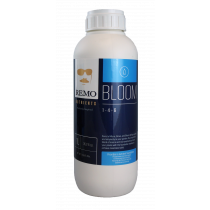
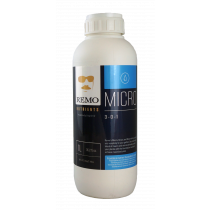
Remo Bloom is a professional bloom-stage base nutrient from Remo Nutrients that we have been supplying to UK growers since 2017. Developed by Remo Gasparrini — a Canadian cannabis cultivator and grower educator with extensive commercial growing experience — Remo Bloom delivers a phosphorus and potassium-forward mineral profile calibrated specifically for the peak flowering phase, when the plant’s demand for these elements dramatically outpaces its vegetative-stage requirements. Clean, precisely formulated and highly soluble, Remo Bloom forms the base of a complete organic-mineral flowering programme.
How Remo Bloom Supports Peak Flower Development
The transition from vegetative growth to flowering represents a profound shift in the plant’s nutritional priorities. Nitrogen demand drops as internode extension stops and resources redirect toward reproductive structures; phosphorus demand increases to power the cellular energy (ATP) required for the rapid cell division occurring in expanding flower tissue; potassium demand rises steeply to drive the phloem loading and sugar transport that fills developing calyxes with the carbohydrates and essential oils that constitute final product quality. Remo Bloom’s NPK ratio reflects these priorities precisely — lower nitrogen, elevated phosphorus and high potassium — in a form that remains stable and plant-available across the pH range of both soil and hydroponic growing. The mineral purity of the formulation supports compatibility with a wide range of organic and mineral additive programmes.
Application Rate and Remo Programme Integration
Use Remo Bloom from the start of flowering through to the final flush at 2–4 ml per litre, adjusting to maintain target EC. Compatible with all growing media — coco, soil, rockwool and DWC. Pair with Remo AstroFlower for additional bloom stimulation and Remo Magnifical for calcium and magnesium management throughout the flowering phase. Maintain pH 5.8–6.2 in hydro/coco, 6.0–6.5 in soil. Begin flush with plain pH-adjusted water in the final 7–10 days before harvest.
Browse the full range: Explore our Remo Nutrients range, part of the wider Nutrients and Additives section at The Horticulture Company. Also in this range: REMO VELOKELP, REMO ASTROFLOWER, REMO MAGNIFICAL, REMO GROW.




Reviews
There are no reviews yet.